Home » History/Preservation » Recent Articles:

Two-Thirds of Readers Opposed Decision to Raze Cupples 7 Warehouse

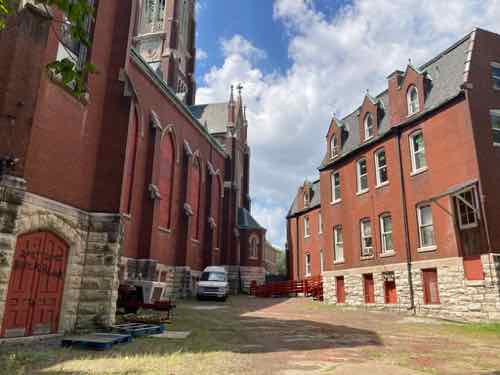
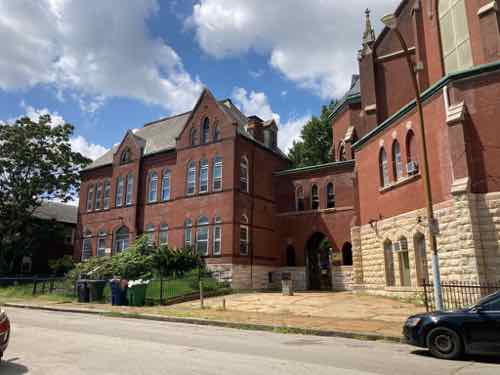
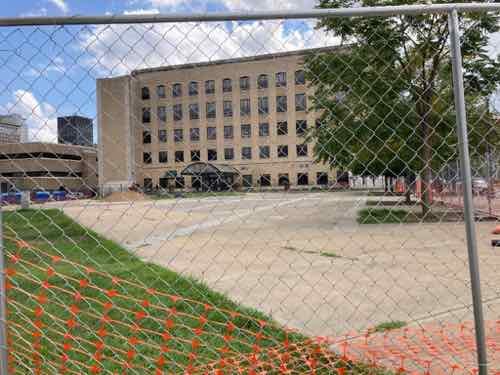
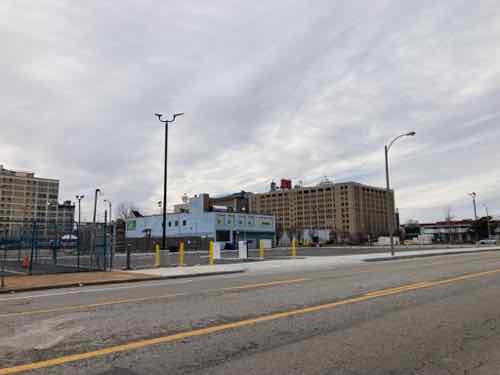
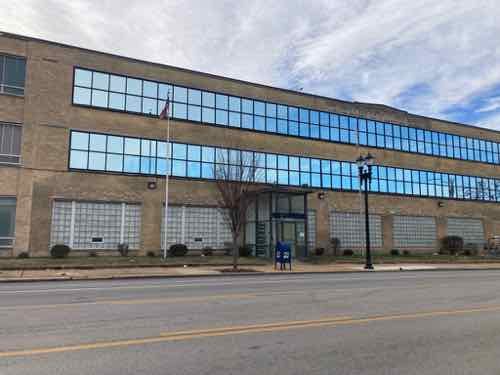
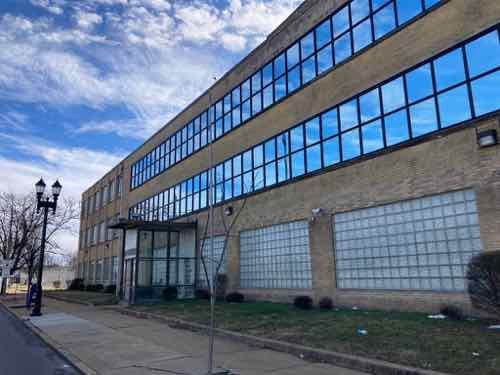
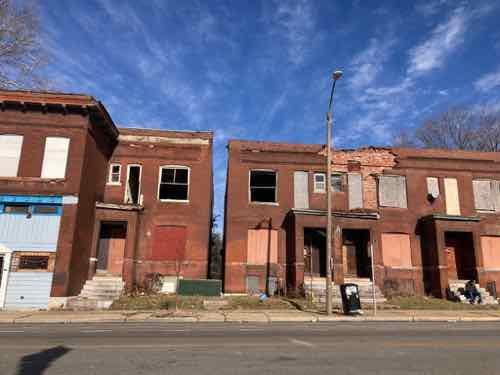
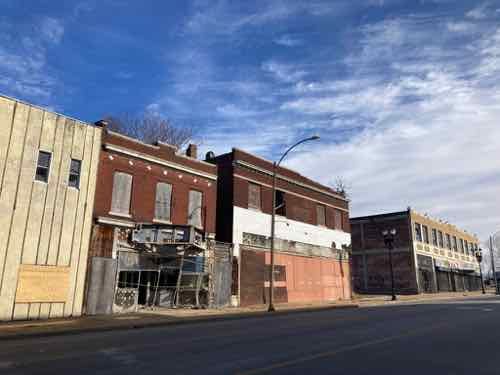
Cupples 2 (left, renovated) and Cupples 7 (right, slated for demolition by the city)

Cupples 2 (left, renovated) and Cupples 7 (right, slated for demolition by the city)

No surprise in the poll last week, readers are opposed to the city razing the Cupples 7 warehouse building, here are the results from the poll last week:

Q: The city plans to raze Cupples 7; support or oppose?

  1. Strongly oppose 65 [44.52%]
  2. Oppose 31 [21.23%]
  3. Support 24 [16.44%]
  4. Unsure/No Answer 10 [6.85%]
  5. Strongly support 9 [6.16%]
  6. Neutral 7 [4.79%]

Nearly half “strongly opposed” to razing the building. If they’re like me, they’d risk collapse while holding out for a developer with deep pockets.

When we simplify the results the contrast becomes even stronger: two-thirds are opposed.

2/3rds of readers were opposed to demolition

2/3rds of readers were opposed to demolition

Yesterday I met with Treasurer Tishaura Jones and Cupples 7 was one of the topics we discussed. Per the previous treasurer, that office must buy the bank note on the property if the city demolishes the building. Jones told me they don’t have any definitive plans for the site once it is cleared. I suggested a transparent process to get the community involved in brainstorming ideas.

I want to see a building, not parking or green space.

– Steve Patterson

Poll: Thoughts on Demolition of Cupples 7

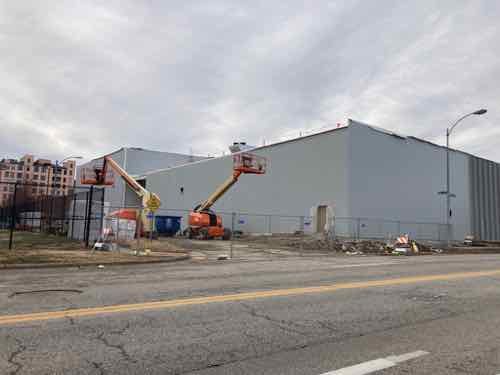
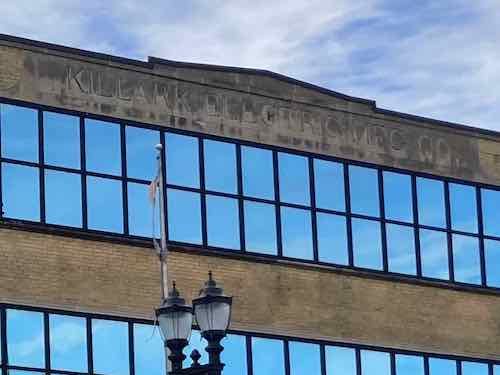
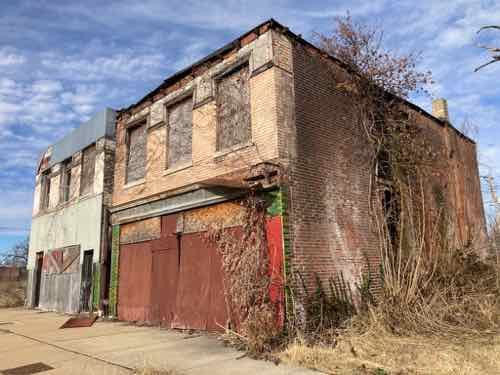
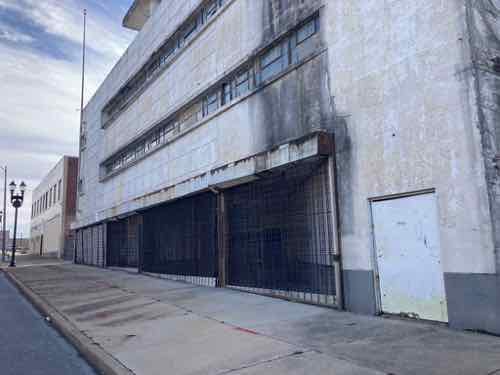
South wall of the Cupples 7 warehouse

South wall of the Cupples 7 warehouse

Last week the city announced the Building Commissioner will order the demolition of the  historic Cupples 7 warehouse if a savior doesn’t come foreword.

The city’s building commissioner is expected to file a demolition permit next week.

The seven story building will be demolished at the end of the month if a developer doesn’t purchase it first.(KSDK)

That’s not much time to find someone with deep pockets to save the structure. Interesting information also came out last week about finances.

Unless a new buyer emerges, the city will be out $850,000. That’s because former Treasurer Larry Williams took an option on the property from Montgomery Bank, lender to the development firm that was unable to follow through on its plan to put condos in Cupples 7. (stltoday)

It looks like Cupples 7 will be coming down because just stabilizing the structure is estimated by some to cost millions.

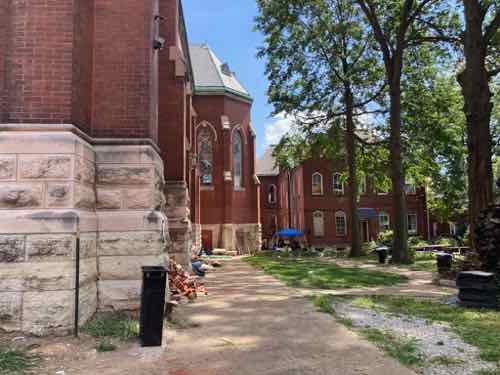
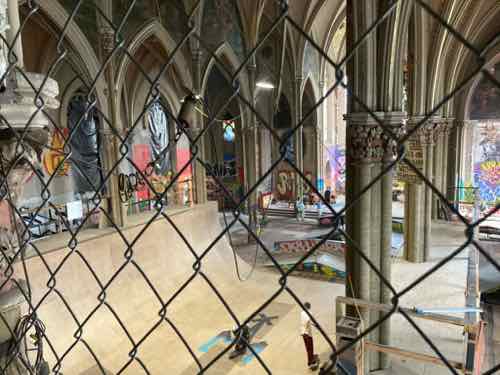
The poll this week seeks to find out if you support the city’s decision, vote in the right sidebar. See Saving Cupples 7: The Importance of Urban Context for more photos.

– Steve Patterson

Ten Buildings That Changed America: The Wainwright In Downtown St. Louis

PBS (WTTW/Chicago) has a new special coming out next month called the Ten Buildings That Changed America. One of the ten is our own 1891 Wainwright Building by Louis Sullivan (National Register nomination). I got to meet host Geoffrey Bear last May when he and the production crew were in St. Louis.

PBS film crew on May 8, 2012

PBS film crew filming the Wainwright in downtown St. Louis on May 8, 2012

Geoffrey Baer

Ten Buildings host & writer Geoffrey Baer, right, will be back in St. Louis on April 22nd for a panel discussion, see below

Here are the details on the free event being held at the Wainwright:

ninenetevent

Our local PBS station is hosting a free event to preview the program.
Click image to register — seating is limited.

If you’re not familiar with Sullivan’s Wainwright you might be wondering just how a building in St. Louis changed America, well here’s your answer:

At only nine stories, the Wainwright is the granddaddy of all skyscrapers. It isn’t the first tall building but Sullivan’s innovative structural steel frame showed that even brick can appear to soar. (stltoday.com)

Yes, skyscraper!

– Steve Patterson


Narrowing The List of Mid-Century Modernism

Mid-century modern buildings in St. Louis have gained a new audience recently as some of these structures have been threatened with demolition. As a result he city decided to take a closer look at buildings built between 1945-75.

The City of St. Louis received a grant in early 2012 for the completion of a thematic survey of non-residential Modern Movement architecture built between 1945 and 1975. The term Modern Movement in used for this project to encompass various styles of the mid?century Modern era, but does not include the Art Deco, Modernistic, Streamline, and Moderne styles that were widely used before 1940. The project will identify a group of properties that are eligible for listing in the National Register and that may be designated as City Landmarks. The grant is from the Missouri State Historic Preservation Office and the National Park Service. Peter Meijer Architect, PC, a firm experienced in assessing Modern architecture, was selected as consultant for the project. The survey will be completed by September 2013.  (PDF)

The process would first start with a massive list and work down to 20-25.

ABOVE: The project is now at the point of narrowing down to the top 20-25

ABOVE: The project is now at the point of narrowing down to the top 20-25

Right now the city and consultants are at the “Defining the Era 40″ stage and their looking for public input to help narrow the list to the final 20-25 for further research and documentation.  The 40 are decided into two parts (Part 1: 1-20 Part 2: 21-40).

Below is all 40 in the order listed on the two PDF files along with a link to each to find them on Google Maps.

  1. Wendell Oliver Pruitt Public School | 1954 | 1212 N. 22nd Street
  2. Mansion House Development | 1965 | 200 N. 4th Street
  3. Millenium Hotel | 1968 | 200 S. 4th Street
  4. Laclede Gas Building | 1968 | 200-12 N. 8th Street
  5. St. Philip’s Evangelical Lutheran Church | 1966 | 2422-4 Annie Malone Drive  
  6. The Pavilion, Barnes Hospital | 1971/1978 | 4949-69 Barnes Hospital Plaza
  7. Queeny Tower, Barnes Hospital | 1964 | 4989 Barnes Hospital Plaza
  8. MHDCHC, Inc. | 1974 | 5443-71 Dr. Martin Luther King Drive
  9. Bishop DuBourg High School | 1955 | 5850 Eichelberger Street
  10. International Brotherhood of Electrical Workers Hall | 1959 | 5850 Elizabeth Avenue
  11. James S. McDonnell Planetarium | 1963 | 1 Faulkner Drive
  12. Steinberg Hall, Washington University | 1963 | 6201-53 Forsyth Boulevard
  13. Former Buder Branch, St. Louis Public Library | 1961 | 5320 Hampton Avenue
  14. St. Louis Harvest Church | 1957 | 3201-23 Itaska Street 
  15. Marc C. Steinberg Memorial Skating Park and Recreation Building | 1957 | 400 Jefferson Drive
  16. David P. Wohl Community Center | 1959 | 1515 N. Kingshighway Boulevard 
  17. New Age Federal Savings & Loan | 1958 | 1401 N. Kingshighway Boulevard
  18. Oak Hill Chapel | 1953 | 6100 Leona Street
  19. AAA Building | 1974 | 3917 Lindell Boulevard
  20. Optimist Building | 1978 | 4490-4 Lindell Boulevard
  21. Engineer’s Club | 1961 | 4359 Lindell Boulevard 
  22. Archdiocese of St. Louis | 1962 | 4445-67 Lindell Boulevard
  23. St. Nicholas Parish Center | 1960 | 1801-27 Lucas Avenue
  24. Society of American Gardens | 1957 | 4401 Magnolia Avenue
  25. Gateway Tower | 1966 | 1-99 S. Memorial Drive
  26. Fairground Park Swimming Facility | 1959 | 3715 Natural Bridge Avenue
  27. St. Louis Community College, Forest Park | 1965 | 5600 Oakland Avenue
  28. St. Joan of Arc Church | 1958 | 5800 Oleatha Avenue
  29. Machacek Branch Library | 1974 | 6426-34 Scanlan Avenue
  30. McDonnell Medical Science Building | 1970 | 4550-6 Scott Avenue
  31. Missouri Division of Employment Building | 1959 | 601 N. Broadway
  32. Pius Memorial Library, St. Louis University | 1958, renovated 1986, 2012 | 3655 West Pine Boulevard
  33. Carpenter’s Union Hall | 1956 | 1401-21 Hampton Avenue
  34. The Post Office Annex | 1969 | 1600-98 Market Street
  35. Hamiltonian Federal Savings and Loan Association | 1967 | 3150-6 S. Grand Boulevard 
  36. St. Louis Public Library Jacob Mark Lashley Branch | 1967 | 4531-7 West Pine Boulevard
  37. Paraquad | 1969 | 5200-40 Oakland Avenue (Horner & Shifrin headquarters)
  38. Langston Elementary Public School | 1964 | 5501 Wabada Avenue 
  39. Juvenile Division Circuit Court | 1965 | 910-30 N. Vandeventer Avenue
  40. Lambert International St. Louis Airport | 1957 | 10701 Lambert International Boulevard

Don’t see a favorite? View buildings already recognized via the National register or local Landmark status here (PDF).  The 200 “worthy” list of addresses  can be viewed here (PDF).

The following are the ones I’d cut to reduce the list:

  1. Millenium Hotel (3)
  2. The Pavilion (5)
  3. Queeny Tower (6)
  4. New Age Federal Savings & Loan (17)
  5. Oak Hill Chapel (18)
  6. Gateway Tower (25)
  7. St. Louis Community College (27)
  8. St. Joan of Arc Church (28)
  9. Machacek Library (29)
  10. McDonnell Building (30)
  11. Pius Library (32)
  12. Carpenter’s Hall (33)
  13. Post Office Annex (34)
  14. Hamiltonian Federal Savings & Loan (35)
  15. Juvenile Court (39)

Which 15-20 would you cut from the above?

– Steve Patterson


Poll: Do You Think St. Louis Was Founded On February 14th or 15th in 1764?

Last week St. Louis turned 249 years old but some celebrated on the 14th while others noted the occasion on the 15th. Others celebrated both days rather than taking sides.

February 14, 1764 has been the accepted date for many years but some are saying Auguste Chouteau’s notes indicate the 15th:

The party was premature, says a history professor at the University of Missouri-St. Louis who has studied Chouteau’s original manuscript for a new book on the city’s founding. Fred Fausz, a professor at UMSL since 1991, says Chouteau’s “5″ isn’t the best example of penmanship but is clear enough. Fausz says the 15 in Chouteau’s manuscript has a 5 that looks just like other 5s elsewhere in the paper, and nothing like the 4 that marks Page 4. Fausz also says Chouteau cited Feb. 15 in transcribed testimony for a land case in 1825, four years before he died. (recommended —  stltoday)

Chouteau was just 14 or 15 when St. Louis was founded. The above article from 2/14/2010 also presents evidence the date is the 14th.

The poll question is which date do you think St. Louis was founded? Or maybe we should just make next year’s 250th anniversary a two-day affair, embracing the controversy. The poll is located in the right sidebar.

– Steve Patterson

Progress At 1010 Locust Street (aka Bride’s House)

The economy isn’t prefect but it is slowly improving. Smaller developers are still working on manageable sized projects such as the 4-story building at 1008-10 Locust St., known by many as Bride’s House.  In August 2011 I posted about the building (see What a Handsome Bride).  The 1886 building was listed on the National Register of Historic Places in 2010, read the application here.

ABOVE: View of Bride's House from Trailnet's new offices

ABOVE: View of Bride’s House from Trailnet’s new offices. August 2011

In November 2012 the good news came that a local couple bought the building to rehab:

The biggest exterior change will be restoration of the street-level facade with separate entrances for a first-floor store and offices on the upper floors. The work will involve removing green granite panels installed in 1950. Cook hopes to reuse the panels in new shower stalls built for office tenants. He also plans to sell the two large “Bride’s House” signs over the current entrance.

The second floor remains available, but a retailer plans to occupy the street-level space and a marketing firm will lease the top two floors, said Patrick McKay, the Hilliker Corp. broker who represented P&F in the building’s purchase. (stltoday.com)

Earlier in the week I was passing the building and spotted workers removing those bland granite panels.

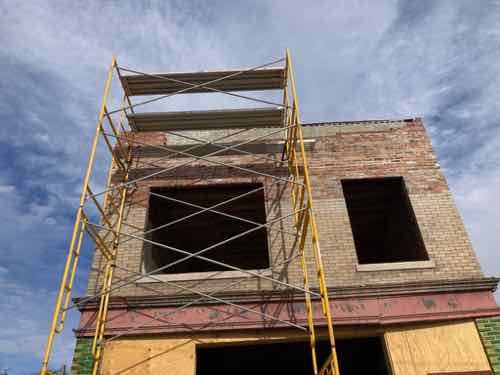
ABnOVE: On the 12th workers were removing those granite panels exposing beautiful detailing.

ABnOVE: On the 12th workers were removing those granite panels exposing beautiful detailing.

ABOVE: Detailing that was covered over for decades.

ABOVE: Detailing that was covered over for decades.

ABOVE: Full view of the facade

ABOVE: Full view of the facade

This project has me more excited than Ballpark Village phase one.

– Steve Patterson

20th Anniversary of the Julia Davis Library Branch

Twenty years ago the Julia Davis branch of the St. Louis Public Library opened at 4415 Natural Bridge Ave. At the time I lived to the east on Hebert Street in Old North St. Louis.

ABOVE:

ABOVE: The modern building was new construction

ABOVE:

ABOVE: Plaque inside the library notes the date of dedication.

Julia Davis was still living when the branch was dedicated — she was 101 years old.

Born in 1891, Davis graduated from Dumas Elementary, Sumner High and Normal Schools and Stowe Teacher College. She received an M.A. in Education from the State University of Iowa and continued graduate study at Lincoln, Boston, Northwestern, St Louis, Syracuse and New York Universities. From 1913 until her retirement in 1961, she taught in the St. Louis Public Schools. Thirty-five of those years were spent at Simmons Elementary. Among her lifelong interests, Davis pursued research in African-American history. She served actively at Central Baptist church and in national, state, and local Baptist educational programs with the Metropolitan Church Federation. She also served with other civic and cultural groups.

In an effort to raise public awareness of the contributions of African-Americans to American culture, Davis initiated, in 1941, a series of annual exhibits at the St. Louis Public Library. She also published many notable works on African-American history, including a calendar of African-American achievements and a compilation of biographical notes on twenty African-Americans for whom St Louis schools were named.

On November 20, 1961, the day of her retirement from teaching, she established the Julia Davis Fund at the St Louis Public Library. The fund was designed for the purchase of books, manuscripts and other materials related to the African-American contribution to world culture. Thus was initiated the Julia Davis Research Collection on African-American History and Culture. It has grown into a major research collection on the subject. The collection is public and serves a lasting tribute to African-American cultural contributions.

She was awarded an honorary doctorate by the University of Missouri-St. Louis in 1981 and celebrated her 100th birthday in November 1991 with a ceremony at Central Library. She died on April 26, 1993. (Wikipedia)

A remarkable life dedicated to education.  The Wikipedia article goes on to say she donated $2,500 to the library at her retirement in 1961 to begin the “Julia Davis Collection of Negro and African Literature and Culture.”  In 2011 dollars that’s over $18,500!!

Thank you Ms. Davis for setting such a great example.

– Steve Patterson

Arch Construction Started 50 Years Ago Today

Half  a century ago work began on Eero Saarinen’s stainless steel Arch.

The Gateway Arch was designed by Finnish-American architect Eero Saarinen and German-American structural engineer Hannskarl Bandel in 1947. Construction began on February 12, 1963, and ended on October 28, 1965, costing US$13 million at the time (approximately $95,900,000 in 2013). The monument opened to the public on June 10, 1967. (Wikipedia)

Demolition of 40 city blocks began on October 10, 1939, leaving a large area vacant for over two decades.

ABOVE:  Image from Jefferson National Expansion Memorial archives.

ABOVE: For 20+ years the Arch site was a just massive parking lot. 
Image from Jefferson National Expansion Memorial archives.

Fast forward to today and we have efforts to commemorate the 50th anniversary of the last piece of the Arch being placed on October 28, 1965. This month they will report the progress:

CityArchRiver 2015 partners will host the third annual Report to the Community on Thursday, February 21. The report will provide the latest news and updates on the project to transform the Arch experience by making it safer and more accessible for visitors.

Representatives from CityArchRiver 2015 Foundation, the National Park Service, Haley Sharpe Design, Missouri Department of Transportation and Great Rivers Greenway District will discuss progress to date and describe new developments. Representatives will be available to answer questions and take comments during an open house immediately following the program.

(snip)

The Report to the Community will be held at the Ferrara Theatre in the America’s Center at 701 Convention Plaza, St. Louis, Mo. 63101. Doors open at 5:30 p.m. with the presentation scheduled from 6 p.m. to 7:30 p.m. After the event concludes, attendees are invited to participate in the open house in the lobby from 7:30 p.m. to 8:30 p.m. (Press Release)

I’m looking forward to hearing the latest on this project to address connectivity issues with the site.

– Steve Patterson

Campbell House Museum Open For 70 Years

The Campbell House Museum at 1508 Locust Street opened 70 years ago today.

Since opening on February 6, 1943, the Campbell House Museum has served the greater St. Louis area as one of the region’s premier historic property museums.

The Museum not only preserves the Campbell’s house, but also their collection of original furniture, fixtures, paintings, objects and thousands of pages of family documents. Included in these documents is a unique album of 60 photographs of the interior of the house taken in about 1885. In 2005 the Museum completed a meticulous five-year restoration that returned the building to its opulent 1880s appearance, when the house was one of the centers of St. Louis society.

campbellhouse

ABOVE: The Campbell House Museum at 15th & Locust was part of a group of mansions on the far west edge of St. Louis

How many museums do you know that have been open for 70 years?  Like the Scott Joplin House, the Campbell House is a look at how people lived in earlier times, wealthy in this case.  Regular hours resume on March 1st, well worth a visit.

 – Steve Patterson

Poll: State Of Race Relations In St. Louis

The book St. Louis Day-By-Day by  Frances Hurd Stadler is fascinating, the entry for January 13th tells a chilling story from 175 years ago:

ABOVE: The old Courthouse in September 2011

ABOVE: The old Courthouse in September 2011

Nathan Brown, newly arrived in St. Louis, wrote to his brother in the East, relating: “I witnessed the sale today by auction of a very interesting young negro boy, 15 years old — sold for $457-1/2. The little fellow was exhibited on the table the same as any other article — and examined by being made to walk back and forth, & by feeling his joints as one would examine a horse. The little fellow appeared to realize his condition and when the big tear rolled down his cheek would merely brush it aside and hold his head up with an air & manner which won him the sympathies of a great number of the spectators. I certainly never have seen a more submissive imploring look than he exhibited as soon as he was sold; his feelings were vented in floods of tears.” While some slave auctions –usually those held to settle estates–took place on the steps of the Old Courthouse, most sales were effected by private dealers who kept notorious slave pens. Ironically, one of these  served as a federal prison during the Civil War.

According to this inflation calculator $457.50 in 1838 is equal to $9,515.96 in 2011 dollars. Wow, for a person! We’ve come a long way in the 175 years since but I don’t think we’re where we need to be.

The poll question this week asks your view on the state of race relations in St. Louis. Improving? Declining? Holding Steady? The poll question is in the right sidebar and the provided answers are presented in a random order.
– Steve Patterson

Advertisement


Recent Comments

Powered by Disqus

National Partner


Archives

Categories