Home » Retail » Recent Articles:

Proposed Rebuild of Kenrick Plaza in Shrewsbury, MO Ignores Walkability & ADA (UPDATED)

I’m not a fan of Walmart, but this post isn’t an attack on the Walmart business model. Instead the purpose of this post is to show how the redevelopment of Kenrick Plaza (map), proposed by G. J. Grewe, as presented, will not meet the minimum requirements of the Americans with Disability Act of 1990 (ADA).

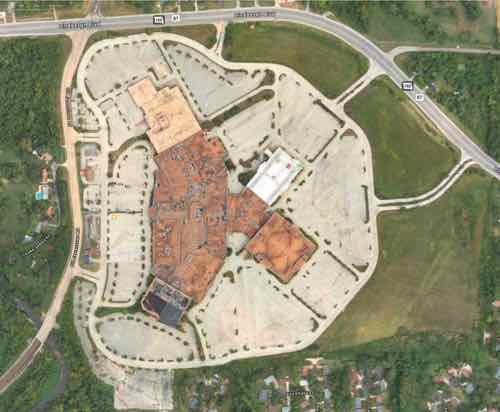
First let’s take a quick look at the area:

Sign for Kenrick Plaza at Watson Rd and Trianomn Parkway Drive

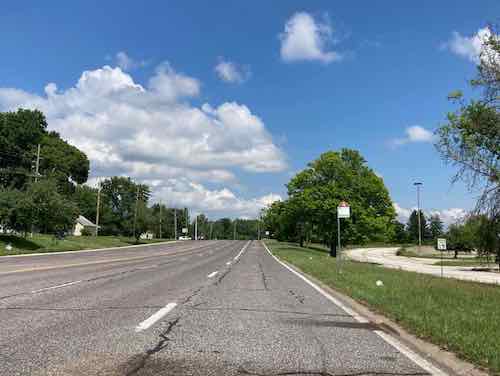
Sign for Kenrick Plaza at Watson Rd and Trianon Parkway Drive, looking east

West side

Sign at Trianon Parkway Drive, looking west

b

b

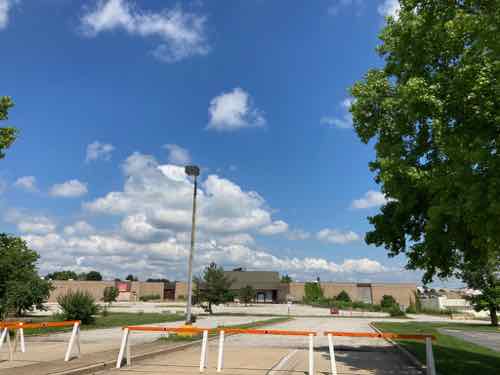
The now-closed Kenrick Cinema is located on the west side of Trianon Parkway.

The now-closed Kenrick Cinema is located on the west side of Trianon Parkway.

A report prepared by PGAV details how Kenrick Plaza is in bad physical condition, the layout doesn’t work well (former Burger King blocks views of retail space behind, etc.) and it doesn’t work for people with disabilities.

Here’s the proposed site plan, which includes cutting off public access to Watson Rd for many houses, leaving one entrance off of Laclede Station as the sole way in and out, with an exception for cutting through the private “lower Kenrick Plaza” area.

Site plan

Proposed site plan, click image to view larger version on Scribd.

The same report talks about the new proposal…

COMPLIANCE WITH THE COMPREHENSIVE PLAN

The Comprehensive Plan for the City of Shrewsbury (the “Comprehensive Plan”) dated March 1970, designates the land use for the Area to be commercial. The Comprehensive Plan, drafted as the Kenrick Seminary lands became open for development, envisioned the land uses immediately adjacent to Watson Road as a commercial corridor that would bring the City’s percentage of commercial land up to 10.4% from a meager 3%. The City was heavily dominated by residential and institutional uses and lacked significant commercial acreage.

The Comprehensive Plan was followed in the original construction of Kenrick Plaza as a commercial district supporting the surrounding residential development that largely lacked retail, entertainment, and restaurant options within close proximity. Also accommodated in the Comprehensive Plan was the construction of one or more television towers. This redevelopment plan maintains the Area as commercial land use consistent with the Comprehensive Plan and accommodates the existing television tower. The map depicting future land use included in the Comprehensive Plan specifically and clearly designates the Area for commercial land use.

Oh good, it complies with the 1970 “Comprehensive Plan”! Apparently nothing in Shrewsbury has changed in the last 43 years. I want to point out a few big red flags about this proposal:

A sidewalk along Watson Rd with "decorative lighting" every 75 feet but you must walk in the auto driveways if you want to shop.

A sidewalk along Watson Rd with “decorative lighting” every 75 feet but you must walk in the auto driveways if you want to shop.

Residents used to driving/walking to Watson Rd will no longer be able to do so, nor can they or their kids/grandkids walk to the store to get bread & milk.

Residents used to driving/walking to Watson Rd will no longer be able to do so, nor can they or their kids/grandkids walk to the store to get bread & milk.

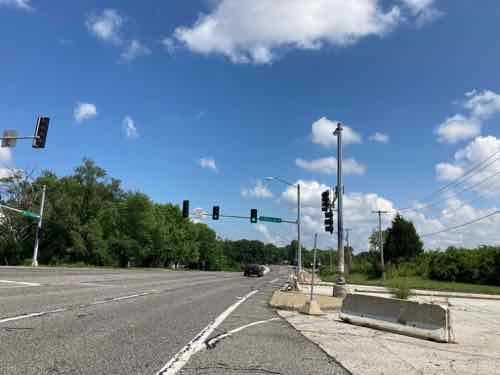
View looking south toward Watson along Trianon Parkway from the last side side street before access to be cut off.

View looking south toward Watson along Trianon Parkway from the last side side street before access to be cut off.

Shrewsbury should be requiring more connections, not fewer.

206 Accessible Routes

206.1 General. Accessible routes shall be provided in accordance with 206 and shall comply with Chapter 4.

206.2 Where Required. Accessible routes shall be provided where required by 206.2.

 206.2.1 Site Arrival Points. At least one accessible route shall be provided within the site from accessible parking spaces and accessible passenger loading zones; public streets and sidewalks; and public transportation stops to the accessible building or facility entrance they serve.

EXCEPTIONS:

1. Where exceptions for alterations to qualified historic buildings or facilities are permitted by 202.5, no more than one accessible route from a site arrival point to an accessible entrance shall be required.

2. An accessible route shall not be required between site arrival points and the building or facility entrance if the only means of access between them is a vehicular way not providing pedestrian access.

 Advisory 206.2.1 Site Arrival Points. Each site arrival point must be connected by an accessible route to the accessible building entrance or entrances served. Where two or more similar site arrival points, such as bus stops, serve the same accessible entrance or entrances, both bus stops must be on accessible routes. In addition, the accessible routes must serve all of the accessible entrances on the site.

Advisory 206.2.1 Site Arrival Points Exception 2. Access from site arrival points may include vehicular ways. Where a vehicular way, or a portion of a vehicular way, is provided for pedestrian trvel, such as within a shopping center or shopping mall parking lot, this exception does not apply.

206.2.2 Within a Site. At least one accessible route shall connect accessible buildings, accessible facilities, accessible elements, and accessible spaces that are on the same site.

EXCEPTION: An accessible route shall not be required between accessible buildings, accessible facilities, accessible elements, and accessible spaces if the only means of access between them is a vehicular way not providing pedestrian access.

Advisory 206.2.2 Within a Site. An accessible route is required to connect to the boundary of each area of sport activity. Examples of areas of sport activity include: soccer fields, basketball courts, baseball fields, running tracks, skating rinks, and the area surrounding a piece of gymnastic equipment. While the size of an area of sport activity may vary from sport to sport, each includes only the space needed to play. Where multiple sports fields or courts are provided, an accessible route is required to each field or area of sport activity. (2010 ADA Standards)


In short this says it is ok to require pedestrians to use an auto drive to a facility like a Starbuck’s but that exception isn’t applicable to a shopping center. Elsewhere in the same link as above, the term “shopping center” is defined as:

(A) A building housing five or more sales or rental establishments; or

(B) A series of buildings on a common site, either under common ownership or common control or developed either as one project or as a series of related projects, housing five or more sales or rental establishments. For purposes of this section, places of public accommodation of the types listed in paragraph (5) of the definition of “place of public accommodation” in section § 36.104 are considered sales or rental establishments. The facility housing a “shopping center or shopping mall” only includes floor levels housing at least one sales or rental establishment, or any floor level designed or intended for use by at least one sales or rental establishment.


Developer G. J. Grewe and Architect TRi should be ashamed for submitting such a plan, this isn’t 1970 despite the fact Shrewsbury’s comprehensive plan hasn’t been updated.

As I was finishing this post yesterday I received an email from Shrewsbury Mayor Felicity indicating “accessibility is being addressed with sidewalks from the bus stop to the stores.”  The site plan on the Shrewsbury website is a preliminary concept. I requested an updated copy but I have not received it.

UPDATE 5/22/2013 @ 3:30pm:

At 3pm I received from Shrewsbury Director of Administration, Jonathan Greever, a PDF copy of ”of the current special use permit site plan. This document is limited in that it does not address the entire site and its intended use is not for construction. The purpose for this document is different than that of a fully engineered plan. As stated previously, the final engineered plans have not been generated.” You can view it on Scribd here.

– Steve Patterson

Press Release: More Strikes Hit St. Louis’ Largest Fast Food Chains

The following is from a press release:

MORE STRIKES HIT ST LOUIS’ LARGEST FAST FOOD CHAINS

Inspired by New York City and Chicago Fast Food Walkouts, St. Louis Workers Strike Major National Chains

First-ever St. Louis Fast Food Walkout; STL Can’t Survive on $7.35 Campaign Launches Calling For $15 and the Right to Form a Union without Retaliation; Aims to Get St. Louis’ Economy Moving Again

ST. LOUIS— Workers walked off their jobs at Jimmy John’s and McDonald’s Wednesday in the first-ever fast-food strike to hit St. Louis and more 100 workers are expected to join them today. In their one-day strikes of major national brands like McDonald’s, Jimmy Johns, Domino’s, Hardees and Wendy’s are on strike, the employees are calling for wages that support their families and the right to form a union without retaliation.

The workers’ campaign, STL Can’t Survive On $7.35, seeks to put money back in the pockets of the 36,000 men and women who work hard in the city’s fast food restaurants, but still can’t afford basic necessities like food, clothing, and rent. The Self-Sufficiency Standard for an adult with one child living in St. Louis County is $14.84 per hour working full time. If workers were paid more, they’d spend more, helping to get St. Louis’ economy moving again.

“There are days I wonder, ‘how am I going to get home’ because I can’t afford my bus fare,” said Patrick Leeper, who has worked at Chipotle for more than three years, “Sometimes I walk for more than an hour just to save my train fare so I can spend it on Ramen noodles. I can’t even think about groceries.”

Fast food workers bring $1 billion a year into the cash registers of St. Louis, yet most of these workers earn Missouri’s minimum wage of $7.35, or just above it, and are forced to rely on public assistance programs to provide for their families and get healthcare for their children. They’re coming together for $15 per hour and the right to form a union so they can support their families, and put money back into the economy.

“I’ve been at Jack in the Box for four years, cleaning and prepping food and all I get paid is $7.55 without any benefits,” said Anita Gregory, a mother of one, who is expecting her second child in the next few weeks. “I’m tired of having to struggle to survive while working so hard.”

It would take a typical St. Louis fast food worker minimum-wage full-time worker more than 1,300 years to earn as much as the CEO of YUM! Brands, which owns Taco Bell, KFC and Pizza Hut, made in 2012.

The two days of strikes here in St. Louis come just weeks after hundreds of fast food and retail workers went on strike in Chicago and hundreds more walked off their jobs in New York City. The strikes by low-wage workers began on Black Friday back in November, with hundreds of Walmart workers walking off their jobs. It spread weeks later to fast food, with workers embarking on the first-ever strike to hit the industry.

Low-wage jobs have accounted for the bulk of new jobs added in the recovery, and fast food positions are among the fastest-growing in St. Louis. Workers here, like those around the country, are increasingly joining together to fight for higher wages that will lift the economy.

“Workers in fast-food jobs are no longer freckle-faced teenagers looking for some summer pocket change,” said the Rev. Martin Rafanan, director of STL $7.35. “Increasingly, fast food jobs are the only options for St. Louisans, but these workers can’t even afford to pay for rent, food and bus fare. If the workers earned more, fast food workers would spend that money at local businesses here in St. Louis and help lift our economy.”

Founded in February of 2013, the St. Louis Organizing Committee is an independent union of fast food workers. The workers’ STL Can’t Survive on $7.35 campaign seeks a $15 an hour wage and the right to form a union without retaliation. The STL Can’t Survive on $7.35 campaign is supported by a coalition of dozens of community, labor and faith-based groups including: ACTION; Adorers of the Blood of Christ; St. Louis AFL-CIO; AFSCME Illinois Council 31; Aquinas Institute; ARAW/Jobs with Justice National; Ascension Episcopal; Bethel Lutheran; Coalition of Black Trade Unionists, St Louis, Central Reform Congregation; Central Reform Congregation; Eastern District Laborer Council 110; Eden Seminary; Epiphany UCC; Episcopal Diocese; Families USA; Gethsemane Lutheran Church; Jobs with Justice Workers’ Right Board; Kirkwood UCC; Missouri Jobs with Justice; MO Health Care For All; MORE; National Nurses United; New Life Evangelistic Center; Parkway United Church of Christ; People’s World; Personal UFCW655; Presbyterian Church USA; PROMO; ProVote; SEIU Health Care; SEIU Local 1; St John’s Catholic Church; St John’s Episcopal; St Joseph’s Catholic Church; St Margaret of Scotland; St Mark Lutheran; St Peter’s United Church of Christ; St. Pius; St Thomas United Church of Christ; Teamsters 688;The Bridge at Newtown; United Church of Christ in Afton; United Food and Commercial Workers 655; United Food and Commercial Workers 88; Wayman African Methodist Episcopal Church; Westminster Presbyterian; Westside Baptist; Young Activists United

Coming Soon to Kingshighway & Delmar: More Low-Density Sprawl

The site of the former National/Schnucks at Kingshighway & Delmar, long vacant, has now been cleared for new development. I’ve viewed the site as an opportunity to build a dense urban project, ideally connected with a Delmar extension of the future Loop Trolley. But current plans may delay dense development of the 4+ acre site for at least the next 20-30 years.

Former grocery store building has now been razed.

Former grocery store building sat back at the east end of the site

The long-vacant building was recently razed.

The long-vacant building was recently razed.

Discount grocer Aldi has announced a new location here.

Discount grocer ALDI has announced a new location here.

But ALDI doesn’t need over 4 acres! Looking at city records online I see The Roberts Brothers has divided the site into three parcels, with ALDI buying one of the three.

Outline of the parcel Aldi purchased.

Outline of the parcel ALDI purchased with Kingshighway on the left, Delmar on the bottom.

The boundaries of the three parcels is intriguing, my guess is so all three can have automobile  entrances facing Kingshighway, or at least a Kingshighway address.  This new store will be part of three recently announced locations also including Creve Coeur & Des Peres (source).

My assumption is this Kingshighway & Delmar location will replace the ALDI less than a mile to the north at Kingshighway & Page (1315 Aubert).

The Aldi at 1315 Aubert (Page & Kingshighway) was built in 1991.

The Aldi at 1315 Aubert (Page & Kingshighway) was built in 1991.

Below is a look at a few ALDI locations in the area, showing size of parcel, year built, and the building size:

Comparison of a few select Aldi locations

Comparison of a few select ALDI locations

The most recently completed ALDI on the list above is the 7701 Olive location. I visited that ALDI in May 2006, shortly after it opened.

View from the Olive auto entrance

View from the Olive auto entrance

A route is provided from Olive but it is not ADA-compliant.

A route is provided from Olive but it is not ADA-compliant.

An ADA-compliant route is provided off North and South

An ADA-compliant route is provided off North and South

This is how ALDI builds US locations from coast to coast. For example, in late 2010 a blogger noted the design for a dense Washington DC neighborhood (see Terrible Aldi design shows need for new parking zoning). As with so many retailers, they’ll do the cheapest design they can, barely meeting minimum standards. If we want/expect better we must demand better — raising the minimum. Retailers will meet the improved standard as long as they can get sales & profit growth.     ALDI does have a few urban locations, but only in super-dense places like Queens, NY.
And before anyone says ALDI and Trader Joe’s are part of the same company let me clarify their relationship.

The [ALDI] chain is made up of two separate groups, Aldi Nord (North – operating as Aldi Markt), with its headquarters in Essen, and Aldi Süd (South – operating as Aldi Süd), with its headquarters in Mülheim an der Ruhr, which operate independently from each other within specific areas.

[snip]

Both Aldi Nord and Aldi Süd also operate in the United States; Aldi Nord is owner of the Trader Joe’s chain while Aldi Süd operates as Aldi. (Wikipedia)

Thus the ALDI we see in the US is NOT related to our Trader Joe’s stores. Another difference between our ALDI stores and our Trader Joe’s is the latter is willing to go compact in dense, walkable areas. For example, the Trader Joe’s I visited in 2009 located at 1700 E Madison St, Seattle, WA.  The store is located on the ground floor with sidewalk entrance, a level of structured parking over the store and four levels of housing over that.
Garage of the Trader Joe's in the Capital Hill neighborhood of Seattle

Garage of the Trader Joe’s in the Capital Hill neighborhood of Seattle

Madison St. in Seattle still has low-density development, like the gas station across from the Trader Joe’s, but one property at a time it is getting more urban. As it gets more urban it attracts more people, increasing the need to be more urban.
Back in St. Louis, we do the opposite. We continue to build low-density sprawl, then scratch our heads wondering why more people don’t walk, use transit, or why our population declines. I’m not suggesting development patterns are the reason for our population decline in the past, but it is a factor today.

A single story ALDI surrounded by surface parking on this corner is totally inappropriate given the context to the east and south.

– Steve Patterson


Old Big Box Stores Live On, Some Too Long

It has been 15 years since St. Louis-based Venture stores closed.

The chain was founded in 1968 when Target founder John F. Geisse went to work for May Department Stores. Under an antitrust settlement reached with the Department of Justice, May was unable to acquire any more retail chains at the time, and the department store company needed a way to compete against the emerging discount store chains. When May’s Executive Vice President Dave Babcock learned that Geisse had resigned from Target Stores, he spoke with Geisse about starting a new discount retailer, resulting in the founding of Venture.

The first Venture store opened in 1970 in the St. Louis suburb of Overland (after Venture closed, the location became a Kmart, which later closed & was demolished for the current Home Depot). In 1976, Geisse retired and left Venture Stores, which had by that time expanded to 20 units. (Wikipedia)

When I was a kid, following the failure of the Woolco discount chain, Venture expanded into Oklahoma City (source). A Woolco/Venture was very close to my parent’s house, I biked there often to buy 45s & later cassingles.

Last week, as I stepped into a former Venture store at 5401 Collinsville Rd in Fairmont City, IL, I recalled biking to Venture as a kid and even visiting a Venture after moving to St. Louis.

Venture sign

Venture sign remains

This Venture store is now Gateway Classic Cars, click image for website

This Venture store is now Gateway Classic Cars, click image for website

The old Venture name is covered by the current sign

The old Venture name is covered by the current sign

The interior is very original, complete with the paint scheme of the walls.

The interior is very original, complete with the paint scheme of the walls.

When a building gets built we should assume it’ll be around for at least half a century. Often this longevity is a good thing, but not always. I took a picture of the men’s restroom but I decided to spare you that sight.

Older structures do provide good low-rent options for businesses, while not making a positive contribution to the area’s image. This is a good example of why we need to think beyond the original depreciation schedule when building.

– Steve Patterson

Dumpsters Block Pine Street Sidewalk At The Park Pacific

I’ve not had much reason to walk along the south side of the Park Pacific building but that changed on Monday when three new eateries opened for business: Smoothie King, Alumni St. Louis, & Flying Cow Frozen Yogurt.

Flying Cow Frozen Yogurt in the NW corner of the Park Pacific at 13th & Olive

Flying Cow Frozen Yogurt in the NW corner of the Park Pacific at 13th & Olive

Alumni St. Louis restaurant facing 13th Street

Alumni St. Louis restaurant facing 13th Street

Smoothie King is located on Pine St in the garage attached to the Park Pacific

Smoothie King is located on Pine St in the first floor of the parking garage attached to the Park Pacific

Very handy having these three so close to my loft! Unfortunately a problem exists reaching all three. You see, the roll out dumpsters for Park Pacific are frequently left out blocking the sidewalk along Pine. Depending upon where they are it’s ether a pain in the butt, or impossible, to pass by in a wheelchair. The able-bodied are forced into the street as well.

Looking west toward 13th

Looking west toward 13th

Looking east toward Tucker

Looking east toward Tucker

The dumpsters have a designated space between the Park Pacific and adjacent parking garage, yet someone is just leaving the out where the block the sidewalk. Hopefully this won’t continue!

– Steve Patterson


Clothing Retailer Uniqlo Coming To St. Louis? When, Not If

March 29, 2013 Featured, Retail 19 Comments

Japanese clothing retailer Uniqlo (pronounced YOU-nee-klo) has only six US stores right now but they plan to have 200 by 2020. Never heard of Uniqlo? I hadn’t either until Sunday when I saw a segment on CBS Sunday Morning’s report The ambitious clothing company Uniqlo aims high (video).

Uniqlo has 1,200 stores worldwide and is the 4th largest clothing retailer in the world. They want to be #1 by 2020, so that means a big push in the US.

New Uniqlo at the Westfield Garden State Plaza mall has an outside entrance in addition to the interior entrance. Click image to see mall in Google Maps.

New Uniqlo at the Westfield Garden State Plaza mall has an outside entrance in addition to the interior entrance. Click image to see mall in Google Maps.

Uniqlo, the Japanese basics brand, is starting aggressive growth plans at shopping malls that are expected to include 20 to 30 new stores a year over the next eight years.

[snip]

To hit the company’s stated target of $10 billion in sales in the United States by 2020, “we need to go where the customer is, and in the United States, malls are the premier location where Americans shop,” Mr. Kyogoku said. The Uniqlo executives declined to discuss specifics about the expansion plans, beyond saying they also included stores in other big American cities. The company is also working on an e-commerce site in the United States, the executives said. (NY Times As U.S. Retailers Retreat, a Japanese Chain Sees an Opening)

So this means we’ll likely get a store in The Galleria and/or West County Mall rather than a pedestrian-friendly area like The Loop or downtown. Remember when people hoped for Urban Outfitters and H&M to locate somewhere other than The Galleria?

Possibly they might locate in the MX District or Ballpark Village, but my money is on The Galleria. Wherever they open it’ll put pressure on chains like Old Navy, Gap, etc.

– Steve Patterson


Springfield IL & Niemann Foods Don’t Understand Pedestrian-Friendly Design

Recently a reader in Springfield IL, the Illinois state capital 90 miles from St. Louis, alerted me to a new County Market grocery store about to open on the NW edge of their downtown. A local newspaper article  talked about the 11,000+ residents within a mile of downtown Springfield and 68,000+ within 5 miles. Tom Moore, director of the new store, was quoted:

“All day long, they come in and say, ‘When are you going to open?’” said Moore. “With the hospitals close by and the apartments close by, we’re expecting quite a bit of foot traffic here. “We’re targeting the whole downtown area, whether it’s the medical community or the neighborhoods.” (State Journal-Register)

Great, they recognize there are many people in the area and they expected lots of foot traffic. Memorial Medical is 2/10th of a mile to the north and St. John’s Hospital is a half mile directly east. County Market is a 100-store chain operated by Niemann Foods based in Quincy IL, an affiliate of Supervalu.  Supervalu is the parent company of St. Louis-based chains Save-A-Lot and Shop ‘N Save. More on the new market later. Springfield’s Regional/Urban Design Assistance Team (R\UDAT)  report from 2002 speaks briefly to making downtown pedestrian-friendly:

As a neighborhood, downtown Springfield should offer a pedestrian friendly environment with pleasant streetscapes, welcoming crosswalks, green space, or other “softscape” areas, parallel or diagonal parking as a buffer from vehicular traffic, adequate signage and easy to understand “way-finding” systems for visitors. The “way-finding” system should be easy to use, but should be somewhat unobtrusive in keeping with the neighborhood environment. Although the linkages are not yet established, the contiguous districts of commercial and historical importance in Springfield – the Lincoln home, the Capitol District – are very walkable from the central downtown core. A visitor will find it convenient to park in downtown Springfield and walk to these and other nearby attractions. Such programs as Lincoln Walks to Work and Looking for Lincoln will reinforce this walk-ability and contribute to the linkages between the downtown and the Lincoln home neighborhood. (Downtown as a Neighborhood)

In that same section they recognized the need to for additional retail to serve local needs, including a grocery store:

The retail mix should meet the needs of the downtown residents, the downtown employees, the residents in the neighborhoods surrounding downtown and downtown visitors and tourists. This mix should include coffee shops, gourmet retail and take out, bookstores, general grocery and merchandise, dry cleaners that offer bundle service, souvenir and general gift shops, ice cream, bakery and other service based businesses for residents. Bringing these uses into the downtown depends on achieving a larger resident population and the resulting greater purchasing power.

The Springfield Strategy 2020 report, completed in 2010, certainly says all the right things speaks more to making Springfield pedestrian-friendly:

“The Springfield of 2020 has preserved residential neighborhoods surrounding the downtown, which boosts pedestrian traffic in the downtown historic district and acts as a buffer to protect the downtown core.” (p23) “We believe that an effective transportation system must also include facilities to encourage biking and pedestrian traffic.” (p27) “The Springfield of 2020 will be pedestrian friendly with sidewalks being maintained, constructed and reconstructed when necessary throughout the city. This is but one way that the Springfield of 2020 will be know as a city that stresses better accessibility for all of its citizens. In addition, requirements for new subdivisions will be developed to encourage the development of amenities for walking and bicycling, as well as additional green space in all new subdivisions.” (p27) “The Springfield of 2020 will include bike paths downtown that have been sponsored and built by the city to encourage biking to area businesses and work places. The city will also develop new pedestrian walkways to encourage pedestrian traffic to historic and government sites so as to reduce downtown vehicular traffic and increase tourist use of area businesses.” (p27)

Great, Springfield seemed to know what was needed to achieve their objectives. Or not… The new County Market that’s expecting lots of pedestrians opened on March 8th, I visited on the 21st.

The main entrance faces west, with a surface parking lot between the 2nd Street public sidewalk and the door. No ADA accessible  route is provided.

The main entrance faces west, with a surface parking lot between the 2nd Street public sidewalk and the door. No ADA accessible route is provided.

Remember, they’re expecting lots of foot traffic to this store. But 2nd Street is a minor road, Carpenter Street is a main arterial. But access is no better from that new public sidewalk.

Looking east on Carpenter St from the County Market auto driveway

Looking east on Carpenter St from the County Market auto driveway

A second entrance to County Market is located on the corner, facing Carpenter St.

A second entrance to County Market is located on the corner, facing Carpenter St. Seeing the marking on the pavement you might think that was to guide pedestrians safely to the public sidewalk.

But it leads to disabled parking, not the sidewalk.

But it leads to disabled parking, not the sidewalk.

Again, they’re expecting lots of foot traffic yet they’ve made zero provisions for all these pedestrians to reach the store. Like so many places, the pedestrians will be forced to compete with the cars.

A customer in a manual wheelchair leaves the County Market via the auto exit on 3/8/2013, opening day. Photo by Steven Simpson-Black

Springfield wants to be pedestrian-friendly by 2020, but they allow this to happen? They also assembled the land and did a $2 million dollar TIF!

Planning and Economic Development Director Mike Farmer hopes it will act as a catalyst for further business growth near the city’s downtown and medical district.

Niemann Foods says 110 full and part-time staff have been hired from the area. The store’s floor plan and design has been called more “urban” than most County Market locations.

The smaller store features a coffee shop with drive-through window and upstairs lounge/dining area with free wireless internet access. A similar store has been built in the heart of the University of Illinois’ Champaign-Urbana campus. (WUIS)

The County Market location at 331 E Stoughton St, Champaign, IL (Google Maps) has the same look, two entrances, and an upstairs — unfortunately that’s where the similarities end. Champaign’s corner entrance is on a different corner and placed at the intersection, while the main entrance faces a surface parking lot.

The secondary entrance to the County Market in Champaign IL helps define the street and welcomes pedestrians.  Source: Google Maps/Streetvew

The secondary entrance to the County Market in Champaign IL helps define the street and welcomes pedestrians. Source: Google Maps/Streetvew

The main entrance in Champaign fronts onto another street with the parking lot on the opposite side.

The main entrance in Champaign fronts onto another street with the parking lot on the opposite side. Source: Google Maps/Streetvew

The Champaign County Foods store lacks the two drive-through windows of Springfield — one for coffee and one for pharmacy. I’m pretty sure drive-through service windows decrease pedestrian traffic, not increase it.

Springfield & Niemann Foods had a chance to build a good urban prototype that would’ve been equally accessible by pedestrians and motorists, but they blew it big time. They need to at least provide an ADA Pedestrian Route from both Carpenter and 2nd Streets to each entrance.

Municipalities and businesses in the St. Louis region make the same mistakes too often.

- Steve Patterson

Distribution Key To IKEA’s Midwest Expansion

IKEA sells simple looking modern furniture but its hardly a simple company. It is often misunderstood or misrepresented. Even simple facts are often wrong, which get repeated. For example:

The company has 285 stores in more than 20 countries and designs its own product which is then produced by more than 1,000 suppliers in 50-plus countries. With only 38 stores in the United States boasting an Ikea is regarded by many cities as a retail status symbol.  (nextSTL.com)

The number of locations/countries was repeated by two local mainstream news sources:

The furniture company has 38 stores in the U.S, part of a total of 285 stores in more than 20 countries. (STL Biz Journal)

IKEA has 38 stores in the United States and 285 locations in more than 20 countries. (KMOV)

Unfortunately this repeated information is inaccurate. From a February 26, 2013 IKEA press release:

Currently there are more than 298 IKEA Group stores in 26 countries, including 50 in North America (11 in Canada; 38 in the US; 1 in the Dominican Republic). IKEA has six distribution centers in North America. The IKEA Group employs 131,000 coworkers and had 655 million visitors in FY 11. (IKEA)

So these reports were short 13 stores and 6 countries, but did get the number of US stores correct at 38. True, 26 is “more than 20.” But even that doesn’t give the complete picture, there are 333 IKEA stores in total:

In January a Swedish documentary revealed that Interogo, a Liechtenstein foundation controlled by the Kamprad family, owns Inter IKEA Holding, which earns its money from the franchise agreements Inter IKEA Systems has with each IKEA store. These are lucrative: IKEA says that all franchisees pay 3% of sales as a royalty. The IKEA Group is the biggest franchisee; other franchisees run the remaining 35 stores, mainly in the Middle East and Asia. One store in the Netherlands is run directly by Inter IKEA Systems. (The Economist

Yes, all 333 IKEA stores franchise the concept. Complicated…

ikea-job-interview

Click image to view cartoonist’s website.

IKEA first entered North America in 1976 with a store outside of Vancouver Toronto in Richmond BC. IKEA didn’t open a US store until nearly a decade later in 1985. My first visit to an IKEA was the Woodbridge VA location in August 1990. Since then I’ve shopped at five more locations.

In 28 years IKEA has gone from zero US stores to 38. Founded in Sweden in 1943, IKEA is a retail giant. After 70 years 333 stores exist. How does this compare to other retailers?

Apple opened its first retail store in Tyson’s Corner VA in May 2001. It now has, according to Wikipedia, 400 stores in 14 countries with 250 of those in the US. Obviously Apple is opening locations at a much faster rate than IKEA. But they’re in different segments, what about a more comparable company? Like Crate & Barrel:

By 1985, the chain had grown to 17 stores, and has continued to grow. In March 1995, it opened its first New York location (its 59th location), in Manhattan. After selling a majority stake to German mail order company the Otto Group in 1998, the company had financing to increase its rate of expansion. By 2002, it had grown to approximately 100 locations, and over 135 locations by late 2004.

Today there are over 170 stores in the United States. (Wikipedia)

Crate & Barrel, like Apple, is far more aggressive about opening locations. The point? IKEA takes its time. From March 2007:

Ikea, the world’s largest home furniture retailer, plans to acquire land in Joliet for a new distribution center that could eventually be as large as 1.4 million square feet.

The Swedish company has been searching for a site in the region for about a year, and recently signed a contract for a 72-acre tract in Joliet southwest of Interstate 80 and Illinois Highway 53, according to sources familiar with the matter. (Crain’s Chicago Business

The Joliet distribution center was supposed to open in 2009 but at this point it hasn’t yet.

Map showing IKEA's six existing, and one future, distribution centers in North America. Click image to see PDF from IKEA on distribution channels.

Map showing IKEA’s six existing, and one future, distribution centers in North America. Click image to see PDF from IKEA on distribution channels.

From the PDF linked above:

To meet the growing demand for products at the 48 IKEA stores in North America, IKEA locates its distribution centers in regions of the country in the United States and Canada where the company can optimize delivery of home furnishing products to the nearest IKEA stores.

In the U.S., this effort is aimed at developing a network that includes regional distribution centers in the East, Midwest, Northwest, South, and Southwest – as well as in Canada – for serving existing and future stores.

I’ve found no press release about the Joliet DC other than the original from March 2007. I’d guess once that facility is opened we’ll have a better shot at landing a store in the St. Louis region.

– Steve Patterson

You Can Buy Just About Anything Online

March 15, 2013 Featured, Retail 7 Comments

My post Tuesday (The Future of the Brick & Mortar Retail Store) drew some interesting, and outdated, views. For example:

“Pets, musical instruments, clothing, food, furniture, consignment items, alcoholic beverages, ice cream, these things make sense to be purchased out of a retail store.”

“…make our weekly trip to the supermarket to stock up on groceries, things that really don’t work online . . . .”

Some erroneously think because they don’t buy these things online, nobody else does either. By that logic everyone still has a landline home phone and gets the printed newspaper delivered every morning. Here’s a look at the items from these comments.

Pets

Pets should come from a local shelter rather than be bought at a store, of course you can browse animals awaiting adoption online. Like cute cats and lovable dogs.

Pet supplies is a big industry!

The US pet and pet supply store industry includes about 8,800 stores with combined annual revenue of about $12 billion and is forecast to grow at a moderate rate in the next two years. Key drivers of growth include increasing income levels, as well as a trend toward pet humanization, or treating pets like family members. (source)

Online sales are about $2 billion:

Unlike traditional brick-and-mortar retailers, participants in the Online Pet Food and Pet Supply Sales industry do not necessarily establish operations following the distribution of population. Densely populated regions are still important to an operator’s geographic location, but not as much as with physical retailers. Online pet supply companies choose their location with rental and transportation costs in mind, since most e-commerce dealers require large amounts of warehouse space. (source)

Of course having a website is no guarantee of success:

Pets.com is one among many other online retailers that failed as a business-to-consumer e-commerce entity. Pets.com was a San Francisco-based e-tailer existing only as a virtual firm that offered pet products, information, and resources to consumers. The site was launched in November, 1998 about the same time as several other online firms offering pet products. Petstore.com, Petopia.com, Petsmart.com, and PetPlanet.com were a few of the major competitors in the online pet industry, although Pets.com had a first-mover advantage being the first of these virtual pet stores to enter the market. In spite of the rising competition in the online pet market, Pets.com appeared to be on a road to success in the beginning of 1999. Sadly, the success never brought profits for the online firm and Pets.com decided to close its doors in November, 2000 just two years after its launch. (source)

Musical Instruments

Here’s a current example from South Bend Michigan:

Music Factory Direct will close its retail store on South Bend’s northwest side to focus its business on growing Internet sales, its owner said.

Dennis Bamber started Music Factory Direct in 2009 at 4004 Technology Drive. He previously ran Woodwind & Brasswind in the same building, which is northwest of where the St. Joseph Valley Parkway crosses the Indiana Toll Road.

Bamber said the company’s online sales of musical instruments are improving, and the business is growing by 10 to 20 percent annually. Sales at the South Bend store, however, have been disappointing.

Music Factory Direct employs seven people, he said, and the closure of the company’s retail store won’t affect that number. (see Music shop closing to focus on Web)

In the St. Louis region Fazio’s Frets and Friends seems like a thriving and popular retail store.

33 years in business, and going strong!! since 1978, we’ve been St. Louis’ best independent music store and we’re a great resource for instruments, accessories, repairs, used gear, instrument and equipment rentals, amplifiers, lessons and advice. With a fantastic selection of great brands…we offer best value with great prices and friendly, personal service from a professional staff who does this for a living.

Their website allows you to order online, or you can call them toll-free. Clearly they do business beyond the St. Louis region! Big companies like Amazon and Best Buy sell instruments online, as do hundreds/thousands of smaller retailers like our own Fazio’s.

In 2011 local store Drum Headquarters closed (Drum Headquarters Closes After 30 Years).

Clothing

Seriously? Sure, clothes will still be sold in stores but online sales are the growth trend. How many local clothing stores do you know of? How many national clothing retail stores like Old Navy doesn’t sell online? Okay, Kleb Clothing & Shoe at 8529 S. Broadway is still in business and it doesn’t even have a website! Kleb’s is an anomaly though, it can’t survive forever, much less increase sales.

Some of the designs available on stl-style.com

Some of the designs available on stl-style.com, click for website

In less than a decade Zappos.com reached $1 billion in sales, it was then bought out by Amazon. Online clothing sales are huge!

Food

You have to buy food in a grocery store, right? Wrong! Locally you can order groceries online from Local Harvest GroceryStraub’s, Dierbergs, and Schnucks, maybe more. Companies like Amazon & Peapod are forcing Walmart to sell food online too. Target doesn’t ship food online but items available in store are listed on their website.

Furniture

IKEA’s stores are great and their shipping is so expensive other companies have sprung up to pickup and deliver their goods. Design Within Reach offers modern furniture online.  St. Louis had a DWR studio but it didn’t last long.

Consignment Items

Like everything else, the consignment business has also moved online.

For instance, RodeoDriveResale.com focuses on luxury designers like Marc Jacobs, Fendi, and Prada, while the newly launched Tradesy.com offers a mix of mid-market and high-end brands such as Zara, Kate Spade, and Michael Kors. StellaPlusJack.com specializes in children’s clothing and accessory brands like Mini Boden and Ralph Lauren. And some websites, including AntoinesConsignment.com, focus on men’s clothing and accessories.

Many of these sites offer prepaid mailing labels for consigners. “You don’t actually have to get in your car and take the things to a particular place,” points out Montgomery, Ala.-based thrift style expert LaCheryl Cillie. “You can hold them until they sell and you have to ship them.” (US News)

Alcoholic Beverages

Liquor Mart is proud to be able to ship wine and non-alcoholic products to California, Colorado, Florida, Idaho, Nebraska, *New Hampshire, North Dakota, Oregon, Washington D.C., and Wyoming.

Due to shipping carrier policies, Liquor Mart is unable to ship beer or spirits to any state at this time. (Liquor Mart)

Laws means online ordering & delivery isn’t possible but through sites like ShopRandalls.com you can can check availability at four local stores.

Ice Cream

Yes you can get overnight delivery of ice cream & gelato!

eCreamery Ice Cream & Gelato was founded by Abby Jordan and Becky App out of a pure love for ice cream and the power of a personalized gift. We love the idea of making ice cream as a GIFT that will be bringing a smile to someone’s face and make a memory. Whether it’s Birthday Ice Cream, Get Well Ice Cream or Thank You Ice Cream, we want to make the moment delicious. (eCreamery)

If I want gelato or ice cream I’ve got lots of local choices but if I can also send ice cream to family in other states as gifts.

With so much available online this presents very real challenges to urbanists who dream of bustling retail streets. Small retail storefronts for larger online operations is one option, as long as it isn’t a burden having an actual storefront. Or maybe have a storefront but not sell anything in it?

Bonobos, (say “bu-NO-bos”) Guideshops are men’s clothing stores that basically don’t sell anything. Customers can try stuff on for size, put outfits together and get advice from salespeople. But if they like it, they’ve got to order it on the Bonobos website.

This small store is a big deal. If other stores catch on — and it may be more of a question of when than if — this could ultimately change the business model for the nation’s 895,800 retail establishments. (USA Today)

Retail is continually changing…

– Steve Patterson

Enough With The IKEA Rumors

Having worked in real estate I learned not to spend the sales commission until after the deal was closed. Blogging is similar.

ABOVE: Ikea in Bolingbrook, IL

ABOVE: Ikea in Bolingbrook, IL was built in 2006 on a 23 acre site

On Sunday nextSTL.com got many St. Louis IKEA fans excited:

Several WhoLou sources are alleging that highly-coveted Swedish-based furniture chain Ikea intends to develop their first St. Louis store close to the campus of St. Louis University. The 300,000 sq. ft. store will allegedly be built near the Laclede Gas and Salvation Army Adult Rehabilitation Center complexes on Forest Park Ave. between Sarah Street and Vandeventer Ave.

While IKEA does have some inner-city locations, most are in suburban sprawl. IKEA contributes to sprawl.

The next day the Post-Dispatch had a story saying the rumor was untrue:

Responding to the nextstl.com post, [Ikea spokesman] Roth said Monday: “We still have not committed to a time frame, let alone a specific site.” The chain has not listed St. Louis among the cities where it plans to open a store. “Nothing has changed,” Roth said. “We continue to evaluate opportunities in the market,” he said. (stltoday.com)

Online many were excited when they saw the original rumor, repeated on KMOV, Fox2, KPLR, but disappointed when IKEA officials said no deal to build a St. Louis store.

I have no doubt that local commercial real estate brokers are talking to every big retail chain to try to lure them to various sites. These retailers might even show some initial interest in one site or another. But until something is signed I feel it’s too premature to report.

– Steve Patterson

Advertisement


Recent Comments

Powered by Disqus

National Partner


Archives

Categories