Readers: Don’t Build South County Connector

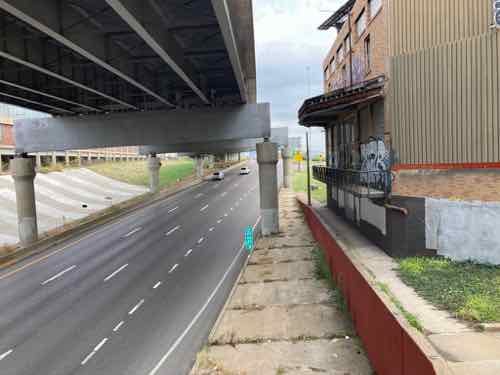
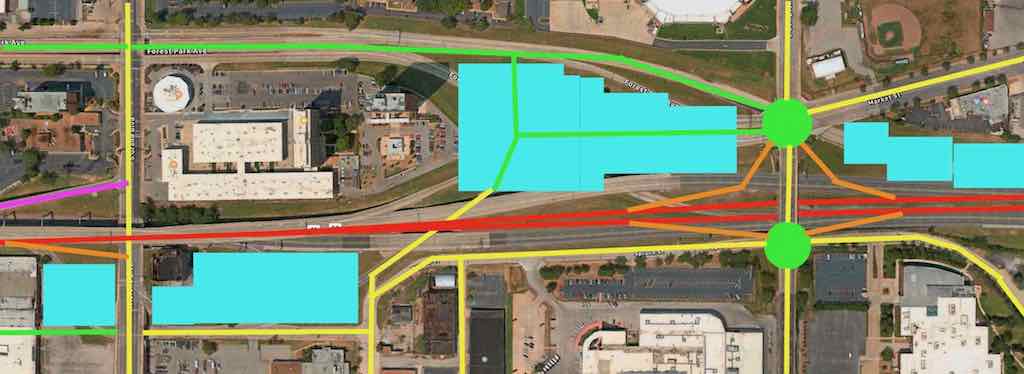
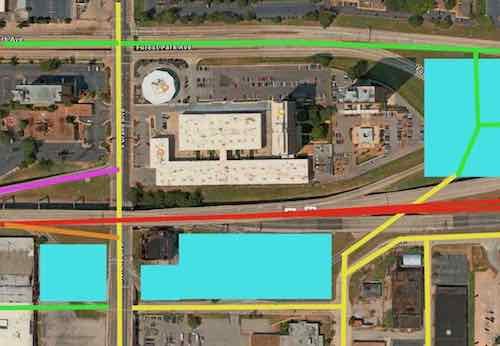
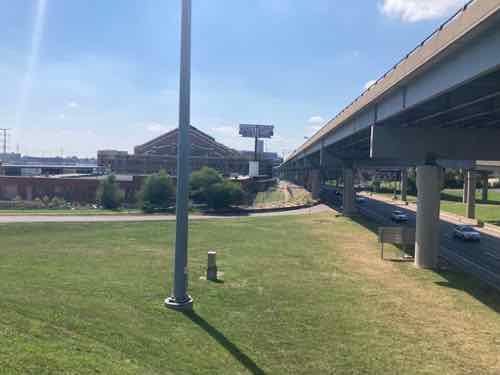
A majority of readers favor Trailnet’s suggestions to focus on transit, biking, and walking efforts to reduce automobile congestion: Q: How should St. Louis County reduce auto congestion between Hanley & Watson? Focus on transit, bicycling and walking solutions 60 [57.14%] Build proposed “South County Connector” partially-elevated roadway 25 [23.81%] …

Proposed Rebuild of Kenrick Plaza in Shrewsbury, MO Ignores Walkability & ADA (UPDATED)

I’m not a fan of Walmart, but this post isn’t an attack on the Walmart business model. Instead the purpose of this post is to show how the redevelopment of Kenrick Plaza (map), proposed by G. J. Grewe, as presented, will not meet the minimum requirements of the Americans with …

Potential Development Sites Along Proposed Streetcar Line, Part 3: 14th & Olive To North Florissant & St. Louis Ave.

In the first two parts of this series on development sites along a proposed streetcar route I looked at Olive from 15th-16th and Olive from 16th-18th. In both cases it was a small area and I looked a specific buildings and parcels of land. Heading to N. Florissant Ave. & St. …

Street Trees Must Be Planted Deep Enough the Root Ball Won’t Dry Out

The Crown Food Mart at 1515 N. 13th opened in 2009, with street trees planted on all sides. Few have survived. Some will say the city is a harsh environment for street trees, the road salt and chemicals used to clear snow & ice from streets is too much for …

Recent Articles:

Readers Say Botanical Garden & Zoo Are Favorite ZMD Institutions

Last week readers selected their favorite two institutions in the Zoo-Museum District (original post) .

Missouri Botanical Garden, June 2011

Missouri Botanical Garden, June 2011

St. Louis Zoo

St. Louis Zoo

Here are the results:

Q: Which TWO (2) institutions in the Metropolitan Zoological Park and Museum District are your favorites?

  1. Missouri Botanical Garden 98 [31.61%]
  2. Saint Louis Zoological Park 94 [30.32%]
  3. Saint Louis Art Museum 77 [24.84%]
  4. Missouri History Museum 22 [7.1%]
  5. Saint Louis Science Center 18 [5.81%]
  6. Unsure/No Answer 1 [0.32%]

The botanical gardens are my favorite, but I’ve spent a lot of time at events at the history museum. I haven’t been to the zoo in 20 years, but I’ll go again this year.

- Steve Patterson

Thinking Ahead To When The Kids Leave The Nest

Dining & entertainment just blocks from many lofts.

Dining & entertainment just blocks from many lofts.

Recently a friend of 40+ years, living in suburbia, posted on Facebook she didn’t know what she’ll do when her two boys move out of the house.   I had to confirm with her, but the oldest is not yet 13.

Empty Nest Syndrome refers to feelings of depression, sadness, and/or grief experienced by parents and caregivers after children come of age and leave their childhood homes. This may occur when children go to college or get married. Women are more likely than men to be affected; often, when the nest is emptying, mothers are going through other significant life events as well, such as menopause or caring for elderly parents. Yet this doesn’t mean that men are completely immune to Empty Nest Syndrome. Men can experience similar feelings of loss regarding the departure of their children.

More mothers work these days and therefore feel less emptiness when their children leave home. Also, an increasing number of adult children between 25 and 34 are now living with their parents at home. Psychologist Allan Scheinberg notes that these “boomerang kids” want the “limited responsibility of childhood and the privileges of adulthood.” Children may also return home due to economics, divorce, extended education, drug or alcohol problems or temporary transitions. (Psychology Today)

From a 2011 story on Census data:

According to the data set, entitled America’s Families and Living Arrangements: 2011, the number of 25 to 34 year olds living with mom and dad has risen among both sexes since 2005: the number of young men living with parents is up from 14% to 19% and the number of young women is up from 8% to 10%. The Census’ graphs indicate that the numbers of older Generation-Yers living under their parents’ roofs — a number that had already been trending up before the “Great Recession” — continued to shoot up following the financial meltdown of 2008, specifically from the beginning of 2009 onwards. (Forbes)

If this continues my friend may not find out what an empty nest is like.

My loft building has all age groups, including many Baby Boomers, that sold their suburban homes for a walkable life downtown. Not for everyone, but the 10,000 a day who turn 65 are impacting the marketplace:

America’s aging population is already placing different demands on the housing market and affecting what developers will likely be focused on providing, according to Terry Holzheimer, director of economic development in Arlington County, Virginia. He’s expecting to see more infill housing, more housing in areas that are walkable, and more pedestrian-oriented neighborhoods with high levels of services and amenities. (The Atlantic Cities)

Some of you will likely argue why empty nesters will keep the suburban nest rather than relocate to a more walkable area. Certainly, many will stay in the home where they raised their kids. Others, like neighbors of mine, will switch places. The kids now with kids of their own will move into the parents house and the parents will move into the kids loft.

– Steve Patterson

McKee & MoDOT To Announce Plans To Complete A Revised 22nd Street Parkway

At a news conference at 1pm this afternoon MoDOT and Paul McKee will announce a revised plan for the long-stalled 22nd Street Parkway. The following is based on confidential materials I viewed briefly.

The blue represents new highway, to be called the McKee Motorway. Red is the new bridge under construction.

The blue represents new highway, to be called the McKee Motorway. Red is the new bridge under construction.

As part of the plan:

  • The resurrected 22nd Street Parkway will be connected to I-44/I-55 by replacing Truman Parkway
  • Ameren Electric will build a new headquarters on the former Pruitt-Igoe site, the old HQ will be razed to make room for the highway.
  • It would bend over and replace Jefferson/Parnell & Salisbury and connect with I-70.
  • A connecter will replace Cass Ave to reach the new bridge.
ABOVE: Only part of a planned highway loop around downtown was built, a huge waste of land to the west of Union Station.

ABOVE: Only part of a planned highway loop around downtown was built, a huge waste of land to the west of Union Station.

From the embargoed press release:

“The solution to redeveloping north St. Louis is having much more highway frontage” said developer Paul McKee, “plus the new McKee Motorway way will serve as a divider to keep unwanted types out of my development area.”

Of course I’m opposed to this plan! Do they think we are fools?

– Steve Patterson

Poll: Oppose or Support Proposed Electric Utility Infrastructure Surcharge?

Most likely you’ve seen recent TV commercials talking about utility surcharges and regulations. These are sponsored by groups on opposite sides of Missouri Senate Bill 207 (link):

SCS/SB 207 – Currently, gas corporations may file a petition with the Public Service Commission for rate adjustments to recover costs incurred for infrastructure replacement projects. This act allows electrical corporations to follow a similar process to recover costs for infrastructure replacement projects. The types of costs that can be recovered include certain work on electric plants, certain capital projects undertaken to comply with environmental or safety regulations, and costs of facilities relocation due to public works projects.

This act details the process that an electric corporation and the Public Service Commission must follow in reviewing applications for infrastructure system replacement surcharges. If surcharges are approved by the Public Service Commission, this act requires electric corporations to submit to the Commission a reconciliation noting the differences between infrastructure system replacement revenues and appropriate pretax revenues. Additionally, this act modifies the amount of revenues that may be produced from an infrastructure system replacement from no less than one million dollars or half of 1% of the corporation’s base revenue and no more than 10% of the corporation’s base revenue. While the electric corporation is collecting an infrastructure system replacement surcharge, they may only adjust the rate two times every twelve months. If an electric corporation files a petition or change to an infrastructure system replacement surcharge, it shall not be considered an increase in the electric corporation’s base rate.

In other words:

The measure would let Missouri’s three investor-owned electric companies — Ameren Missouri, KCP&L and Empire District Electric — put the cost of replacing infrastructure on customer’s bills without first needing to get approval from the Public Service Commission. (St. Louis Business Journal)

Supportive viewpoint:

Under current law utility companies have to go through the Public Service Commission to increase rates to pay for infrastructure and other additional expenses. This process can take months. They said this bill fixes that regulatory lag and allows utility companies to invest faster while interest rates are low. Supporters said this will give the companies better credit ratings, which could make utilities cheaper in the long run and make infrastructure projects more attractive to investors. (KMOX)

Opposition viewpoint:

The Fair Energy Rate Action Fund, an opponent of the legislation, said the changes are not near enough to protect consumers. Executive Director Chris Roepe said the proposed expiration date is lengthy, the cap still would allow for significant costs and proving a case to get the refund would be difficult.

 “It’s still a really terrible bill for Missouri businesses and families,” Roepe said. (Southeast Missourian)

Who is the Fair Energy Rate Action Fund?

FERAF is a diverse coalition comprised by consumer protection groups. Members of FERAF include:

  • AARP
  • Missouri Association for Social Welfare
  • Consumers Council of Missouri
  • Missouri Association of Retailers
  • Ford Motor Company
  • Noranda Aluminum

The utilities have Missourians for a Balanced Energy Future with 19 co-chairs!

The poll this week seeks to find out how readers feel about this issue. The poll is on the right sidebar, mobile users need to switch to the desktop layout to vote in the poll.

– Steve Patterson

Thank You Stray Rescue

Stray Rescue Welcomed Animals From St. Louis’ Shelter on July 19, 2010. At the time the front of the new facility was unfinished raw space.

St. Louis Mayor Francis Slay (center) looks on as Randy Grim (right) accepts a $550,000 check to Stray Rescue from Terry Block, President, Nestlé Purina Pet Food-North America.

7/19/2010: St. Louis Mayor Francis Slay (center) looks on as Randy Grim (right) accepts a $550,000 check to Stray Rescue from Terry Block, President, Nestle Purina Pet Food-North America.

Since that first day when the dogs were transferred to the kennels in the new facility the front has been completed.

Stray Recue

Stray Recue is located at 2320 Pine, click image to view website

Thank you to Randy Grim, the staff, and volunteers behind Stray Rescue for the last 15 years!

– Steve Patterson

Clothing Retailer Uniqlo Coming To St. Louis? When, Not If

March 29, 2013 Featured, Retail 19 Comments

Japanese clothing retailer Uniqlo (pronounced YOU-nee-klo) has only six US stores right now but they plan to have 200 by 2020. Never heard of Uniqlo? I hadn’t either until Sunday when I saw a segment on CBS Sunday Morning’s report The ambitious clothing company Uniqlo aims high (video).

Uniqlo has 1,200 stores worldwide and is the 4th largest clothing retailer in the world. They want to be #1 by 2020, so that means a big push in the US.

New Uniqlo at the Westfield Garden State Plaza mall has an outside entrance in addition to the interior entrance. Click image to see mall in Google Maps.

New Uniqlo at the Westfield Garden State Plaza mall has an outside entrance in addition to the interior entrance. Click image to see mall in Google Maps.

Uniqlo, the Japanese basics brand, is starting aggressive growth plans at shopping malls that are expected to include 20 to 30 new stores a year over the next eight years.

[snip]

To hit the company’s stated target of $10 billion in sales in the United States by 2020, “we need to go where the customer is, and in the United States, malls are the premier location where Americans shop,” Mr. Kyogoku said. The Uniqlo executives declined to discuss specifics about the expansion plans, beyond saying they also included stores in other big American cities. The company is also working on an e-commerce site in the United States, the executives said. (NY Times As U.S. Retailers Retreat, a Japanese Chain Sees an Opening)

So this means we’ll likely get a store in The Galleria and/or West County Mall rather than a pedestrian-friendly area like The Loop or downtown. Remember when people hoped for Urban Outfitters and H&M to locate somewhere other than The Galleria?

Possibly they might locate in the MX District or Ballpark Village, but my money is on The Galleria. Wherever they open it’ll put pressure on chains like Old Navy, Gap, etc.

– Steve Patterson


Study: Connection Between Transit and Real Estate Value

A study released this month looked at five regions and found a connection between home values and transit:

From the Executive Summary:

Overall there was a substantial decline in average residential sales prices in the study regions between 2006 and 2011. However, in all of the regions, the decline in average residential sales prices within the transit shed was lower than in the region as a whole or the non-transit area. Across the study regions, the transit shed outperformed the region as a whole by 41.6 percent. Figure 1 shows the percent change in average residential sales prices in the transit shed and non- transit area relative to the regional percent change in price.

Within a given region, heavy rail, light rail, and BRT transit sheds held their value best. In addition to having higher frequency service and better transit connectivity, these types of fixed-guideway transit stations also tend to be located in areas that are more walkable, have higher residential density, and better access to jobs. Commuter rail sheds also saw a smaller decline in average residential sales prices than the region as a whole.

Percent change in average residential sales prices relative to the region, 2006-11

Percent change in average residential sales prices relative to the region, 2006-11

apta-nar2

Click cover image to view the 39-page study from the American Public Transportation Association and the National Association of Realtors.

From the Conclusion:

Transit type also had an effect on the resilience of property values, which benefited more from transit that was well connected and had a higher frequency of service. Although most commuter rail transit sheds still saw a smaller decline in average residential sales prices than the region as a whole, heavy rail, BRT, and light rail transit sheds outperformed commuter rail transit sheds within and across regions. Heavy rail transit sheds had significantly higher levels of transit access, as measured by the Transit Connectivity Index and the Transit Access Shed, than the commuter rail sheds. Average monthly household transportation costs were also substantially lower in the heavy rail than the commuter rail sheds, indicating that the heavy rail sheds had not only higher levels of transit service, but were more location efficient overall. For most property types, the transit shed outperformed the region; however, unlike with transit type, there were no consistent trends across regions.

In addition to providing consumers and planners with information, the findings support investment in transit and encourage development in location efficient areas. The presence of fixed-guideway transit not only benefits individual property owners, it also supports a more resilient tax base.

I read about the study here. This is no surprise to many of us, but others won’t believe the results. “Everyone aspires to a McMansion in suburbia and driving everywhere” they’ll proclaim.

It’s 2013, not 1963!

- Steve Patterson

Readers Leaning Toward Approval of 3/16th of a Cent Arch/Parks Sales Tax

Concept drawing at Arch grounds

Concept drawing at Arch grounds

Next Tuesday voters in St. Louis City and St. Louis County will be asked to approve a 3/16th of a cent sales tax increase that will expire in 20 years. The poll results here are not scientific, only reflecting the views of a small segment of the electorate. Early on the “no” votes outnumbered the “yes” votes 2-1, but slowly throughout the week the yes votes gained momentum but not enough to clear 50%.

Q: Do you support Prop P on the April 2nd ballot? Prop P=3/16th of a cent sales tax for Arch/parks

  1. Yes 75 [46.3%]
  2. No 59 [36.42%]
  3. Undecided 14 [8.64%]
  4. Not a voter in STL City/County 6 [3.7%]
  5. Unsure/No Opinion 4 [2.47%]
  6. Other: 4 [2.47%]

The four (4) other answers were:

  1. Probably, but not enthused about itAdd as a poll answer
  2. No, would much rather see the 3/16 cent sales tax go to lowering Lambert”s debt
  3. It’s strange that St. Louis must put so much money into a park it doesn’t own…
  4. Yes, but would greatly prefer revenue to be raised by property taxes .

The Post-Dispatch favors the tax increase:

You add 4.225 percent state tax rate to local rates to get the combined sales tax. The base city sales tax is 4.266 percent, slightly higher in some special taxing areas. The base combined state and local sales in St. Louis city is 8.491 percent, 25th highest among those 107 metro areas. If Prop P passes, the base rate will rise to about 8.51 cents. That’s barely noticeable unless you buy a $20,000 car, when it will cost you another $37.50 in sales taxes. (Editorial: Yes on Prop P. Arch-parks-trails tax fixes old problems, creates new opportunities)

I’m still undecided, but leaning toward “yes.”

- Steve Patterson

Springfield IL & Niemann Foods Don’t Understand Pedestrian-Friendly Design

Recently a reader in Springfield IL, the Illinois state capital 90 miles from St. Louis, alerted me to a new County Market grocery store about to open on the NW edge of their downtown. A local newspaper article  talked about the 11,000+ residents within a mile of downtown Springfield and 68,000+ within 5 miles. Tom Moore, director of the new store, was quoted:

“All day long, they come in and say, ‘When are you going to open?’” said Moore. “With the hospitals close by and the apartments close by, we’re expecting quite a bit of foot traffic here. “We’re targeting the whole downtown area, whether it’s the medical community or the neighborhoods.” (State Journal-Register)

Great, they recognize there are many people in the area and they expected lots of foot traffic. Memorial Medical is 2/10th of a mile to the north and St. John’s Hospital is a half mile directly east. County Market is a 100-store chain operated by Niemann Foods based in Quincy IL, an affiliate of Supervalu.  Supervalu is the parent company of St. Louis-based chains Save-A-Lot and Shop ‘N Save. More on the new market later. Springfield’s Regional/Urban Design Assistance Team (R\UDAT)  report from 2002 speaks briefly to making downtown pedestrian-friendly:

As a neighborhood, downtown Springfield should offer a pedestrian friendly environment with pleasant streetscapes, welcoming crosswalks, green space, or other “softscape” areas, parallel or diagonal parking as a buffer from vehicular traffic, adequate signage and easy to understand “way-finding” systems for visitors. The “way-finding” system should be easy to use, but should be somewhat unobtrusive in keeping with the neighborhood environment. Although the linkages are not yet established, the contiguous districts of commercial and historical importance in Springfield – the Lincoln home, the Capitol District – are very walkable from the central downtown core. A visitor will find it convenient to park in downtown Springfield and walk to these and other nearby attractions. Such programs as Lincoln Walks to Work and Looking for Lincoln will reinforce this walk-ability and contribute to the linkages between the downtown and the Lincoln home neighborhood. (Downtown as a Neighborhood)

In that same section they recognized the need to for additional retail to serve local needs, including a grocery store:

The retail mix should meet the needs of the downtown residents, the downtown employees, the residents in the neighborhoods surrounding downtown and downtown visitors and tourists. This mix should include coffee shops, gourmet retail and take out, bookstores, general grocery and merchandise, dry cleaners that offer bundle service, souvenir and general gift shops, ice cream, bakery and other service based businesses for residents. Bringing these uses into the downtown depends on achieving a larger resident population and the resulting greater purchasing power.

The Springfield Strategy 2020 report, completed in 2010, certainly says all the right things speaks more to making Springfield pedestrian-friendly:

“The Springfield of 2020 has preserved residential neighborhoods surrounding the downtown, which boosts pedestrian traffic in the downtown historic district and acts as a buffer to protect the downtown core.” (p23) “We believe that an effective transportation system must also include facilities to encourage biking and pedestrian traffic.” (p27) “The Springfield of 2020 will be pedestrian friendly with sidewalks being maintained, constructed and reconstructed when necessary throughout the city. This is but one way that the Springfield of 2020 will be know as a city that stresses better accessibility for all of its citizens. In addition, requirements for new subdivisions will be developed to encourage the development of amenities for walking and bicycling, as well as additional green space in all new subdivisions.” (p27) “The Springfield of 2020 will include bike paths downtown that have been sponsored and built by the city to encourage biking to area businesses and work places. The city will also develop new pedestrian walkways to encourage pedestrian traffic to historic and government sites so as to reduce downtown vehicular traffic and increase tourist use of area businesses.” (p27)

Great, Springfield seemed to know what was needed to achieve their objectives. Or not… The new County Market that’s expecting lots of pedestrians opened on March 8th, I visited on the 21st.

The main entrance faces west, with a surface parking lot between the 2nd Street public sidewalk and the door. No ADA accessible  route is provided.

The main entrance faces west, with a surface parking lot between the 2nd Street public sidewalk and the door. No ADA accessible route is provided.

Remember, they’re expecting lots of foot traffic to this store. But 2nd Street is a minor road, Carpenter Street is a main arterial. But access is no better from that new public sidewalk.

Looking east on Carpenter St from the County Market auto driveway

Looking east on Carpenter St from the County Market auto driveway

A second entrance to County Market is located on the corner, facing Carpenter St.

A second entrance to County Market is located on the corner, facing Carpenter St. Seeing the marking on the pavement you might think that was to guide pedestrians safely to the public sidewalk.

But it leads to disabled parking, not the sidewalk.

But it leads to disabled parking, not the sidewalk.

Again, they’re expecting lots of foot traffic yet they’ve made zero provisions for all these pedestrians to reach the store. Like so many places, the pedestrians will be forced to compete with the cars.

A customer in a manual wheelchair leaves the County Market via the auto exit on 3/8/2013, opening day. Photo by Steven Simpson-Black

Springfield wants to be pedestrian-friendly by 2020, but they allow this to happen? They also assembled the land and did a $2 million dollar TIF!

Planning and Economic Development Director Mike Farmer hopes it will act as a catalyst for further business growth near the city’s downtown and medical district.

Niemann Foods says 110 full and part-time staff have been hired from the area. The store’s floor plan and design has been called more “urban” than most County Market locations.

The smaller store features a coffee shop with drive-through window and upstairs lounge/dining area with free wireless internet access. A similar store has been built in the heart of the University of Illinois’ Champaign-Urbana campus. (WUIS)

The County Market location at 331 E Stoughton St, Champaign, IL (Google Maps) has the same look, two entrances, and an upstairs — unfortunately that’s where the similarities end. Champaign’s corner entrance is on a different corner and placed at the intersection, while the main entrance faces a surface parking lot.

The secondary entrance to the County Market in Champaign IL helps define the street and welcomes pedestrians.  Source: Google Maps/Streetvew

The secondary entrance to the County Market in Champaign IL helps define the street and welcomes pedestrians. Source: Google Maps/Streetvew

The main entrance in Champaign fronts onto another street with the parking lot on the opposite side.

The main entrance in Champaign fronts onto another street with the parking lot on the opposite side. Source: Google Maps/Streetvew

The Champaign County Foods store lacks the two drive-through windows of Springfield — one for coffee and one for pharmacy. I’m pretty sure drive-through service windows decrease pedestrian traffic, not increase it.

Springfield & Niemann Foods had a chance to build a good urban prototype that would’ve been equally accessible by pedestrians and motorists, but they blew it big time. They need to at least provide an ADA Pedestrian Route from both Carpenter and 2nd Streets to each entrance.

Municipalities and businesses in the St. Louis region make the same mistakes too often.

- Steve Patterson

Distribution Key To IKEA’s Midwest Expansion

IKEA sells simple looking modern furniture but its hardly a simple company. It is often misunderstood or misrepresented. Even simple facts are often wrong, which get repeated. For example:

The company has 285 stores in more than 20 countries and designs its own product which is then produced by more than 1,000 suppliers in 50-plus countries. With only 38 stores in the United States boasting an Ikea is regarded by many cities as a retail status symbol.  (nextSTL.com)

The number of locations/countries was repeated by two local mainstream news sources:

The furniture company has 38 stores in the U.S, part of a total of 285 stores in more than 20 countries. (STL Biz Journal)

IKEA has 38 stores in the United States and 285 locations in more than 20 countries. (KMOV)

Unfortunately this repeated information is inaccurate. From a February 26, 2013 IKEA press release:

Currently there are more than 298 IKEA Group stores in 26 countries, including 50 in North America (11 in Canada; 38 in the US; 1 in the Dominican Republic). IKEA has six distribution centers in North America. The IKEA Group employs 131,000 coworkers and had 655 million visitors in FY 11. (IKEA)

So these reports were short 13 stores and 6 countries, but did get the number of US stores correct at 38. True, 26 is “more than 20.” But even that doesn’t give the complete picture, there are 333 IKEA stores in total:

In January a Swedish documentary revealed that Interogo, a Liechtenstein foundation controlled by the Kamprad family, owns Inter IKEA Holding, which earns its money from the franchise agreements Inter IKEA Systems has with each IKEA store. These are lucrative: IKEA says that all franchisees pay 3% of sales as a royalty. The IKEA Group is the biggest franchisee; other franchisees run the remaining 35 stores, mainly in the Middle East and Asia. One store in the Netherlands is run directly by Inter IKEA Systems. (The Economist

Yes, all 333 IKEA stores franchise the concept. Complicated…

ikea-job-interview

Click image to view cartoonist’s website.

IKEA first entered North America in 1976 with a store outside of Vancouver Toronto in Richmond BC. IKEA didn’t open a US store until nearly a decade later in 1985. My first visit to an IKEA was the Woodbridge VA location in August 1990. Since then I’ve shopped at five more locations.

In 28 years IKEA has gone from zero US stores to 38. Founded in Sweden in 1943, IKEA is a retail giant. After 70 years 333 stores exist. How does this compare to other retailers?

Apple opened its first retail store in Tyson’s Corner VA in May 2001. It now has, according to Wikipedia, 400 stores in 14 countries with 250 of those in the US. Obviously Apple is opening locations at a much faster rate than IKEA. But they’re in different segments, what about a more comparable company? Like Crate & Barrel:

By 1985, the chain had grown to 17 stores, and has continued to grow. In March 1995, it opened its first New York location (its 59th location), in Manhattan. After selling a majority stake to German mail order company the Otto Group in 1998, the company had financing to increase its rate of expansion. By 2002, it had grown to approximately 100 locations, and over 135 locations by late 2004.

Today there are over 170 stores in the United States. (Wikipedia)

Crate & Barrel, like Apple, is far more aggressive about opening locations. The point? IKEA takes its time. From March 2007:

Ikea, the world’s largest home furniture retailer, plans to acquire land in Joliet for a new distribution center that could eventually be as large as 1.4 million square feet.

The Swedish company has been searching for a site in the region for about a year, and recently signed a contract for a 72-acre tract in Joliet southwest of Interstate 80 and Illinois Highway 53, according to sources familiar with the matter. (Crain’s Chicago Business

The Joliet distribution center was supposed to open in 2009 but at this point it hasn’t yet.

Map showing IKEA's six existing, and one future, distribution centers in North America. Click image to see PDF from IKEA on distribution channels.

Map showing IKEA’s six existing, and one future, distribution centers in North America. Click image to see PDF from IKEA on distribution channels.

From the PDF linked above:

To meet the growing demand for products at the 48 IKEA stores in North America, IKEA locates its distribution centers in regions of the country in the United States and Canada where the company can optimize delivery of home furnishing products to the nearest IKEA stores.

In the U.S., this effort is aimed at developing a network that includes regional distribution centers in the East, Midwest, Northwest, South, and Southwest – as well as in Canada – for serving existing and future stores.

I’ve found no press release about the Joliet DC other than the original from March 2007. I’d guess once that facility is opened we’ll have a better shot at landing a store in the St. Louis region.

– Steve Patterson

Advertisement


Recent Comments

Powered by Disqus

National Partner


Archives

Categories