Home » Public Transit » Recent Articles:

Potential North-South & County Light Rail Line Should Include ‘Green Track’

June 30, 2022 Environment, Featured, North City, Planning & Design, Public Transit, Transportation Comments Off on Potential North-South & County Light Rail Line Should Include ‘Green Track’

No, I don’t want the rails to be painted green. Instead I want the space between the rails to be green with vegetation, where possible.

Why? Aesthetics, cooler temperatures, management of stormwater runoff, etc.
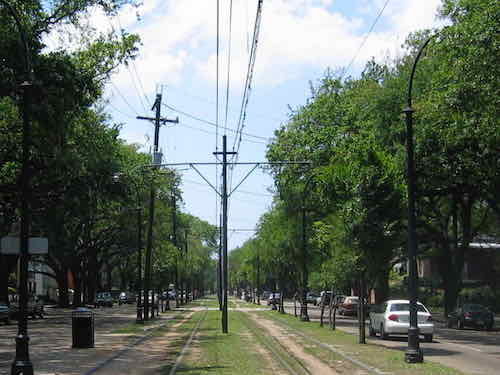
Pre-Katrina you could see natural green track in New Orleans LA, April 2004

Green track isn’t limited to only historic lines, it’s increasingly common in Europe with some limited use in North America.

Over more than 6 (six) decades Green Tracks are popular through out Europe in dense urban areas. They are a fantastic tool to mitigate stormwater issues, to reduce noise and certainly to beautify their integration. Green light rail tracks demonstrate environmental responsibility and they value their customers by making things nice, green and beautiful. Today there are over 500 miles of Green light-rail tracks in Europe.

The living green layers within and around the tracks reduces the noiseand absorbs stormwater. Thus, reducing combined sewer overflow. Modern track systems are typically Ballastless Tracks or Slab Track systems. Basically, a traditional elastic combination of ties/sleepers and ballast is replaced by a rigid construction of concrete or asphalt. Because such systems are ideal for greenery, it is even possible to create additional stormwater retention and detention from surrounding impervious areas with the system.

Already, in 1995 Green Roof Technology filed patents for greening systems on Ballastless Track systems. Currently there are around 300 miles of green tracks in Germany alone. As a result, these tracks eliminate at least 150,000 gallons of water per years from entering the combined sewer system.

In North America, Baltimore started with some experimental Green Light-rail Tracks in 2011 insisting on Sedum mats. The testing was less promising because Sedum mono-cultures are not a good choice for most green light-rail track system. Unfortunately the advice from Green Roof Technology using a smart mixtures of grasses, herbs and wildflowers was not heard. Some call it learning by doing – well – they just don’t do it. (Green Roof Technology).

Typically rails are supported by ballasts, treated wood or concrete pieces set into the ground perpendicular to the rail. Our original 1993 light rail line used wood ballast, the 2006 Shrewsbury extension (aka Blue) line was constructed with longer-lasting concrete ballasts.

Our current lines are Red & Blue so naturally I’d like this new line to be the Green Line. Green track for the Green Line!

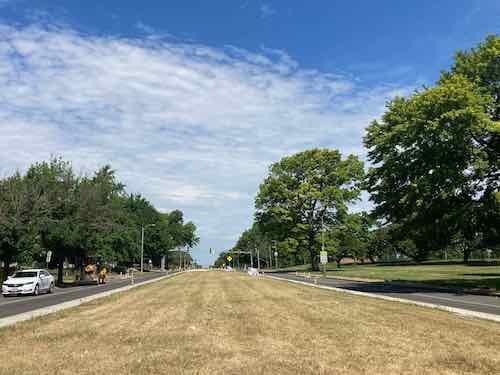
It can’t be everywhere, but in many places it can be. A lot of the new line would be in the center of Natural Bridge, which recently went through a quick traffic calming project that reduced vehicle travel lanes to one per direction. Adjacent to Fairgrounds Park the center is green — would be greener if not on top of asphalt.
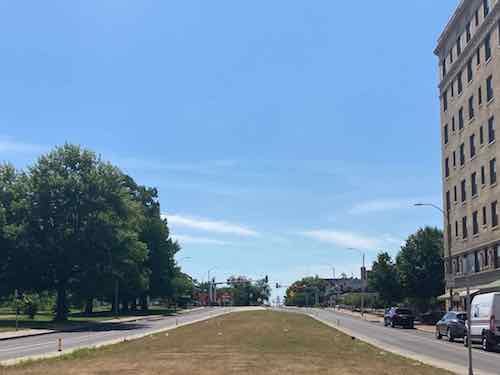
Looking east toward Grand
Looking west from the same location.

I think the green looks nice, helps keep the area slightly cooler.

While we’re on the subject of alternatives to impervious concrete, another would be water — yes, wet track! Rail going through a fountain…

Not sure if or where this might work, but I think it’s very interesting. Perhaps on Jefferson near the stop near Olive or Market? Guests in new hotels could look down from their rooms and see transit & water converge.

I’d just like us to consider something other than boring ordinary impervious paving.

— Steve Patterson
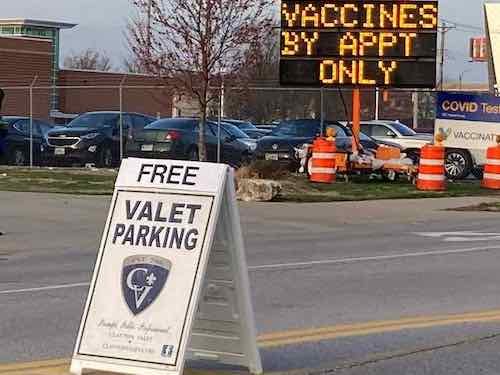
 

Auto-Centric Pandemic, Vaccine Site Adjacent To Light Rail Station Didn’t Mention Using Transit

March 25, 2021 Central West End, Featured, Public Transit, STL Region, Transportation Comments Off on Auto-Centric Pandemic, Vaccine Site Adjacent To Light Rail Station Didn’t Mention Using Transit

The previous 12 months have highlighted how auto-centric the United States is. So far during this pandemic we’ve seen drive through food banks, and COVID-19 testing. Each with cars backed up for miles. To keep the cars on the road there were also lines at licensing offices.

From May 28, 2020:

On Friday, May 29 CVS Health will open 22 new COVID-19 drive-thru test sites across Missouri, including locations in St. Louis.

CVS Health expects to have up to 1,000 locations across the country offering this service by the end of May.

The testing will be by appointment only. You won’t go into the store, but sit in your car and administer the test. (Fox2)

From June 11, 2020:

Many St. Louis-area residents endured long lines and waiting times at licensing offices Thursday, which recently re-opened due to COVID-19 worries.

Thursday, a News 4 crew found some people who waited several hours at two licensing offices in west St. Louis County, where only a few people are allowed inside at one time to due to COVID-19 restrictions. (KMOV)

From November 25, 2020:

From California to New York, pictures have emerged of thousands of people waiting to receive groceries from their local food banks ahead of the Thanksgiving holiday.

It’s one side effect that has cropped up as a result of the coronavirus pandemic that continues to sweep the nation. Experts say the problem is rooted in high unemployment and low cash flow. (CNBC)

So it was no surprise when it came time for vaccinations that many sites weren’t accessible by foot or public transit. As with food & testing, people in their cars were backed up for miles to get a shot.

Last Thursday:

Traffic was backed up for more than a mile in both directions entering the county’s drive-thru mass vaccination site. The event, put on by the St. Charles County Health Department with support from the Missouri National Guard, was expected to vaccinate 4,000 people by the time it wrapped up Thursday evening. (KMOV)

Monday I got my first shot. I’d been on a waiting list at BJC only, as I knew I’d be able to take transit. Many people signed up for multiple lists with the expectation they’ll drive wherever they need to.

Valet parking makes sense, especially for those who can’t walk far.

I was given a choice of vaccination sites, but I picked the 4353 Clayton location because I knew it was adjacent to the Cortex MetroLink station. The instructions from BJC, however, didn’t mention transit at all.

  • Due to social distancing restrictions, do not arrive before your scheduled time.
    • If you arrive earlier, please remain in your vehicle until it’s time to enter the building.
  • Please park in the lot at the front of the building, labeled “30 minute visitor,” or the lot west of the building, labeled “2 hour visitor.”
    • Free valet parking is also available at the front of the building.
    • Click here for a parking map.

Despite my criticism of their lack of mentioning transit, the entire process was very well orchestrated. Outside they had signs & people to direct drivers. At the building they had people stationed at every step to keep the flow going. I was in and out in under a half hour!

– Steve Patterson


Evaluating Mobile Transit Directions in St. Louis

November 5, 2018 Featured, Public Transit, Transportation Comments Off on Evaluating Mobile Transit Directions in St. Louis

I do recall using public transit in St. Louis (and a few other cities) before the age of modern smartphones. Compared to today’s technology, it was primitive. Even since I’ve been a regular smartphone-carrying transit user the technology has advanced substantially.

The vast majority of Americans – 95% – now own a cellphone of some kind. The share of Americans that own smartphones is now 77%, up from just 35% in Pew Research Center’s first survey of smartphone ownership conducted in 2011.

A substantial majority of Americans are cellphone owners across a wide range of demographic groups. By contrast, smartphone ownership exhibits greater variation based on age, household income and educational attainment. (Pew Internet Mobile)

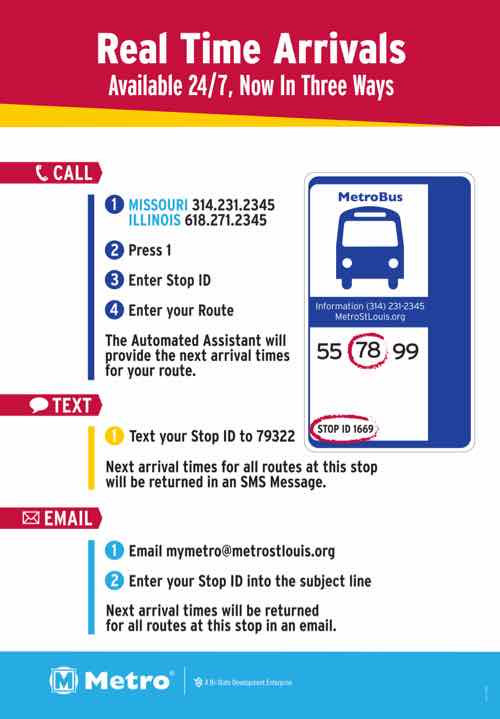
Even though a majority have a smartphone now, it doesn’t mean they all have lots of storage space for various transit apps or enough data to get information on them. Before we get into smartphone apps, here’s a graphic that shows you phone, text, and email options from our transit agency, Metro:

Call, text, or email to find out real time transit information. Click image for more information from Metro.

I’ve used the texting feature several times — works great. Even MetroLink platforms have stop IDs so I can text to see if the next train is the Red or Blue line. For this post I tested the phone & email options, both also worked fine.

Since my cataracts surgery (left eye) in August, I can actually read my phone while outside — including small print! As a result of being able to see again, I’ve been looking into other options besides the familiarity of Google Maps for local transit directions.

While driving I prefer Apple Maps, first released 6 years ago. Transit directions didn’t come to the app for quite a while, then only in bigger cities. I tried using it when we’ve visited Chicago, but I don’t know their system/routes well enough to trust a new app, so I stuck with Google Maps. In late March St. Louis was added to Apple Maps and I’ve been testing it off & on since.

The smartphone market consists of only two platforms now — Google’s Android and Apple’s iOS (iPhone). Google Maps is available on both, but Apple Maps isn’t on Android. I’ve also been testing Metro’s ‘Metro On The Go’ app which is available for both platforms. For this post I downloaded two other apps that are also available on both platforms: Transit & Citymapper. The latter doesn’t have St. Louis mapped, but it has some very nice functionality — more on it later.

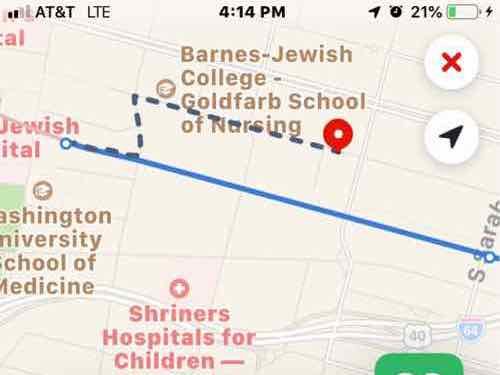
I tested all, except the one that doesn’t have St. Louis map info, by trying to go from home at 16th & Locust to Solae/DuPont at 4300 Duncan Ave. — I go there frequently for taste tests.  This is in the Cortex District and across Boyle from Cortex Commons & the Cortex MetroLink station that opened on July 31, 2018.

Google Maps (Android & iOS)

The majority of smartphone owners use navigation apps and most prefer Google Maps, according to new survey data from The Manifest. It has 67% of the market compared to 12% for Waze, 11% for Apple Maps, and 8% for MapQuest. (Apple World)

Google Maps, launched in 2005, is the dominant mapping service for both driving & transit. It shows me the most transit options and gives me the option to reduce transfers, reduce walking, etc.

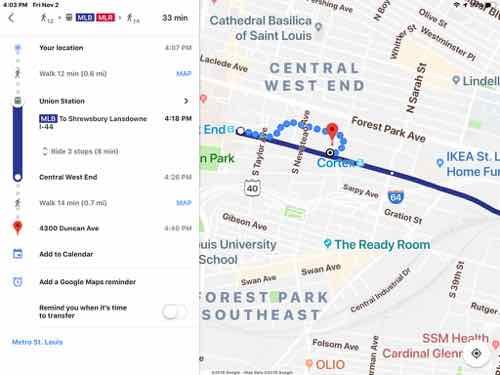
Google Maps on iPad

Google Maps defaulted to the #10 bus, which I often take. For train only it wanted me to go to Union Station, not Civic Center, an easier route of the same distance, no elevator to deal with. I was able to use options to have it give me bus directions to Civic Center where I could catch a Westbound train. Interestingly, it wanted me to pass through the new Cortex station and get off at the Central West End station and walk back 2/10ths of a mile. D’oh!

I do like that when I open Google Maps, and search for a location, it defaults to the mode last used, usually transit on my phone. Having used it for transit in many cities, I’m most familiar with this interface. Other than wanting me to pass the Cortex station and walk back it does a good job. Earlier this year it did want me to transfer from one bus to another, not at the Civic Center MetroBus Center, but at 14th & Chouteau. I can’t recall where I was going when it did that, I reported it to Metro.

Apple Maps (iOS only)

Apple Maps rightly got skewered when it first came out, but like I said now I prefer it for driving directions. I tried using it for transit a few times in Chicago, but I don’t know their bus routes well enough to trust it.

Once St. Louis was added I felt comfortable giving it a try.

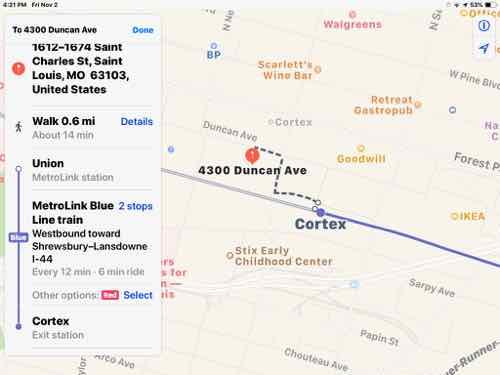
Apple Maps on iPad

Apple Maps defaulted to driving…it always defaults to driving. Very frustrating! On transit mode it defaulted to train from Union Station. No option to catch a bus to Civic Center to catch a train. However, it knows the Cortex MetroLink station is open and closer to my destination than CWE Station. For my simple routes Apple Maps works fine.

Metro On The Go (Android & iOS)

Metro’s app is basically their web format in a handy spot. The next departure feature from favorite or nearby stops is now my go to for quick departure times.  For example, when I finish at the doctor I can quickly find when the next Northbound bus is leaving from the nearby stop.

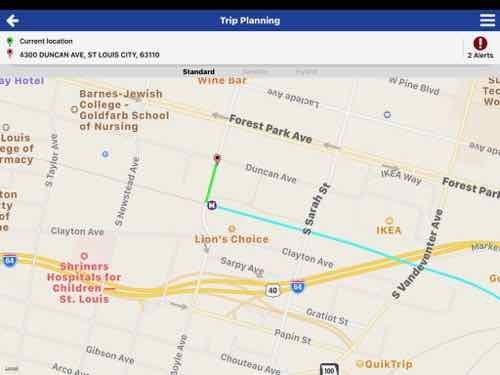
Metro On The Go app on iPad

For the test it also knew to direct me from the Cortex Station. It defaulted to taking a bus to Civic Center to catch a train — what I do since the Cortex station opened 3+ months ago. The app is still a little crude compared to the more polished apps from Google & Apple.

Transit app (Android & iOS)

This app has good ratings and a fresh interface. I like at the bottom it shows you times to walk, bike, or the an UberX — with estimated cost.

Like Google Maps, it directed me to the CWE station rather than the closer Cortex station. I’m not going to delete it yet, will continue to use occasionally to compare to others.

Citymapper (Android & iOS)

Like I said above, this app doesn’t include St. Louis at this time. Still, I like the interface and options presented.

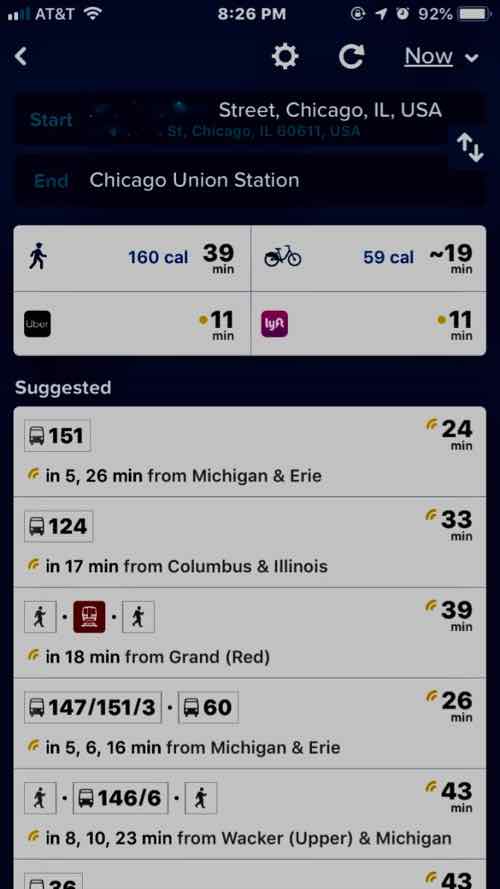
Options for the journey between the Chicago condo where we stay when visiting the Windy City and Union Station to return home. The #151 bus is the most common method we use.

Showing walking & biking first is excellent, in my view.

Final thoughts

With 95% owning a cellphone, 77% a smartphone, the explosion of mapping apps, text services, etc really benefits the transit rider — both the daily & occasional rider. The trick is finding the right app for your particular needs. Being open to trying new apps is also a good idea.

— Steve Patterson
 

Well-Used Bus Stop Is A Muddy Hole After It Rains

August 20, 2018 Accessibility, Featured, Public Transit, Transportation, Walkability Comments Off on Well-Used Bus Stop Is A Muddy Hole After It Rains

Usually when I go to my regular doctor I take either the #97 (Delmar) MetroBus or MetroLink to connect with the southbound #90 MetroBus at Goodfellow or Forest Park station, respectively. However, depending on the bus schedule and my appointment time I’ll take the #10 MetroBus from Olive @ 16th to the Gravois-Hampton MetroBus Transit Center, and then catch the #90 MetroBus heading northbound. The alternative takes about 15 minutes longer, but often will get me to my destination closer to my appointment time.

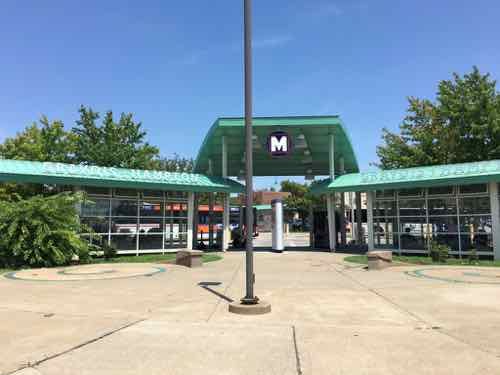
The #10 (Lindell-Gravois) MetroBus ends at the transfer center on the NE corner of Hampton & Gravois

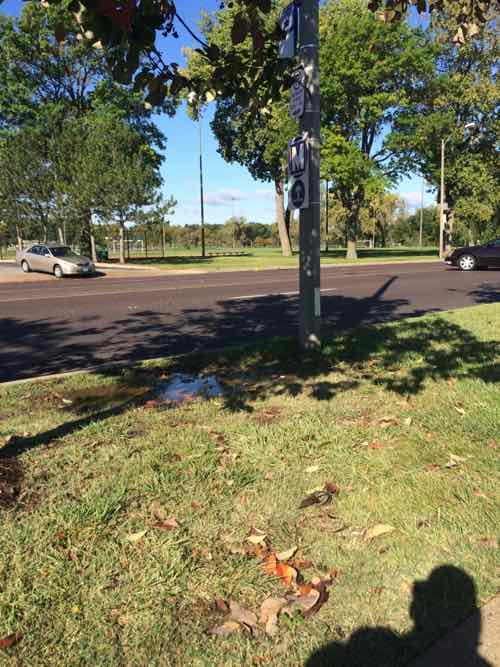
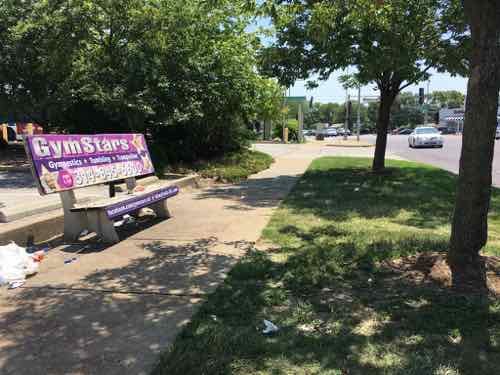
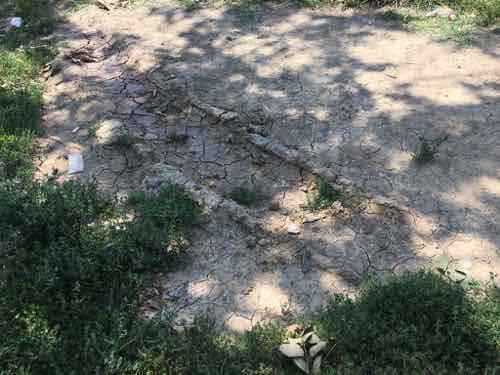
But I only take the Gravois-Hampton alternate if it hasn’t rained recently. You see, the bus stop I use to catch the Northbound #90 is a muddy hole if it has rained recently.

The bus stop is where thw standing water is on this October 2014 photo.

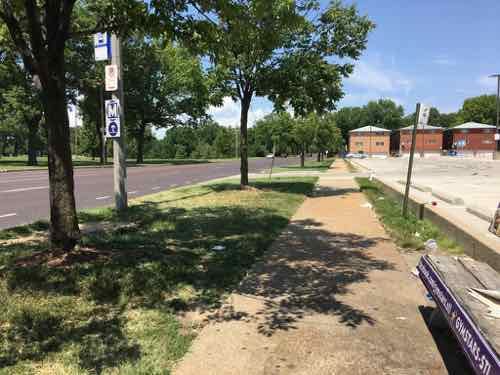
‘The Northbound #90 bus stays on Hampton rather than pulling into the transit center. Riders getting off/on must use the grassy tree lawn.

At the bus stop looking South toward the MetroBus transit center
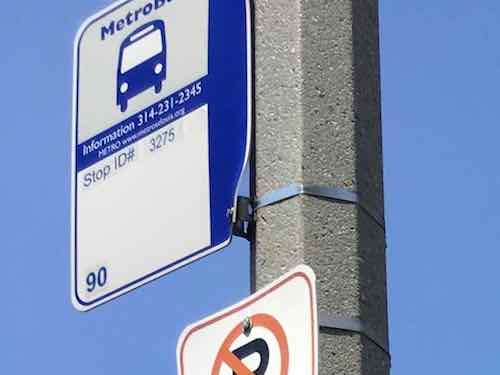
Looking North, note the bus stop sign is mounted very high on the poll — and facing the street. I couldn’t read the stop ID from my wheelchair.
Cropping later I could see it’s stop #3275
The tree lawn is quite wide here, you can see how the grass is well-worn.
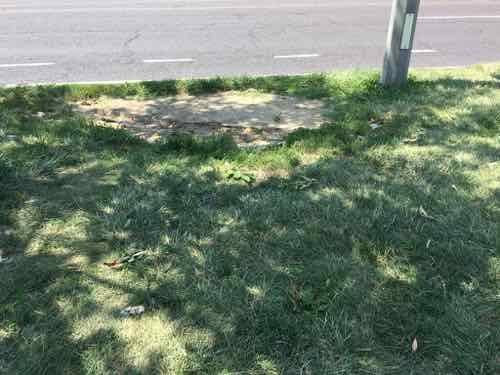
Up close I could see a tire track likely made when it was muddy

Even dry this stop is a problem when boarding. When the bus driver puts out the ramp/lift it leaves a huge gap my chair must get up — this is because all the use has worn this spot down so it’s lower than the curb and surrounding grass. Recently I was waiting in the grass just before the stop to avoid this problem. It’s adenegrated  experience for everyone dry or wet, impossible for us wheelchair users when wet.

Metro occasionally gets grants to improve accessibility of MetroBus stops — #3275 needs to be toward the top of the list for improvement.

— Steve Patterson
 

Proposed Rail Transit Through Downtown, An Alternative To Delmar

July 16, 2018 Featured, Public Transit, Transportation Comments Off on Proposed Rail Transit Through Downtown, An Alternative To Delmar

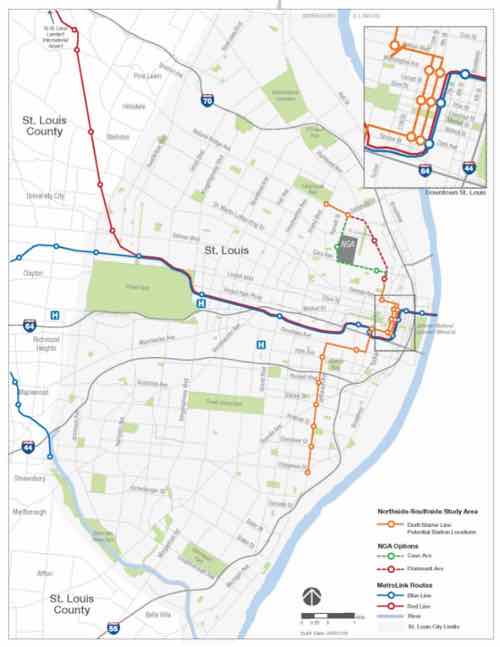
Last week I promised an alternative to the proposed alignment for the proposed northside-southside light rail study. At the time I thought my alternative would work only with the Cass option, but it could work with the North Florissant alignment. First, a look at the overall plan at this point.

The overall route map

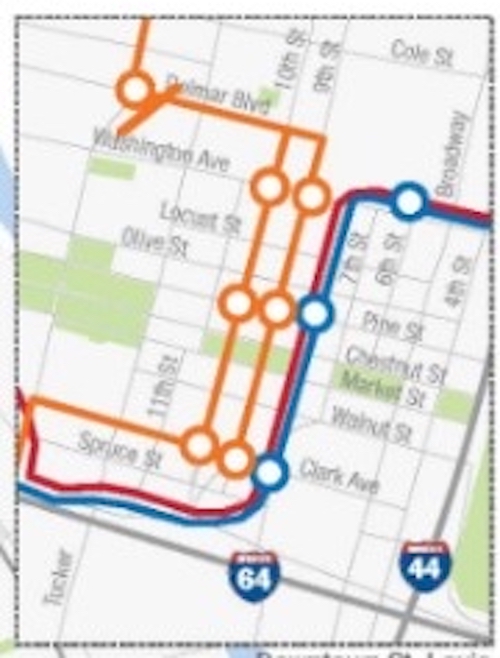
Now let’s examine the downtown inset from the upper right.

From the South the line comes North on 14th from Chouteau, East on Clark. 9th Street would be used for northbound vehicles, 10yth Street for Southbound. All would use Convention Plaza (aka Delmar) to 14th Street. Stations would be at Clark, Pine, & Washington.

Now let’s examine the downtown inset from the upper right.

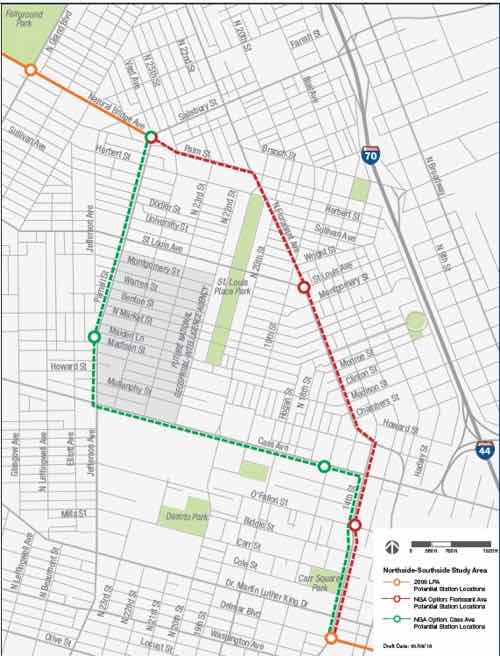
Two alternatives to 14th & Cass to Parnell (Jefferson) & Natural Bridge

In 2007-2008 the plan stayed on 14th rather than go East into the Central Business District. This new alignment through the CBD is much better for transit users and visibility that transit is an option.

This is looking West at Clark from 9th. The rail line would come toward us on Clark then turn North on 9th (our right)
Now we’re looking North on 9th, the Stadium West garage is on the right
Looking North on 9th from Walnut — there’s plenty of height for the rail vehicles, overhead wires, etc
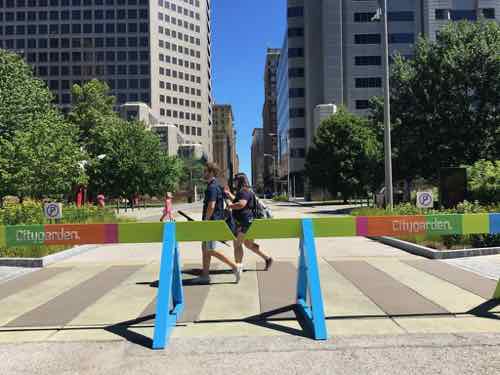
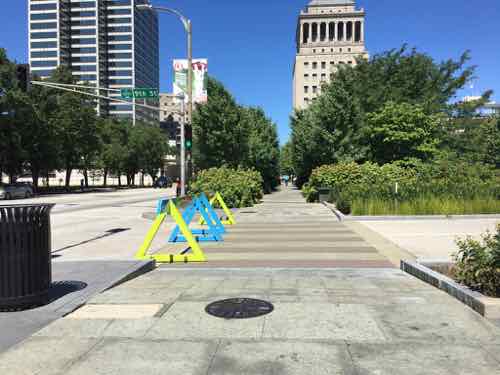
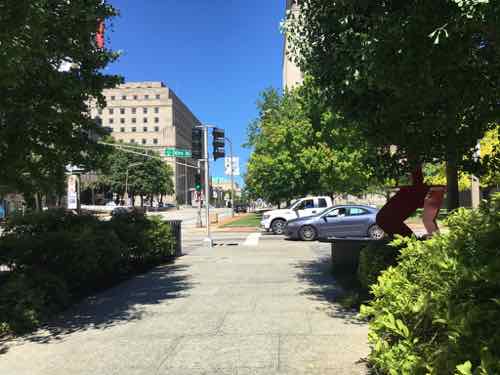
Since opening in 2009 Citygarden has unofficially closed 9th Street. Would rail be allowed but not other vehicles?
The reason they closed 9th is because they didn’t figure out how to let pedestrians using the “hallway” to know when it was safe to cross 9th
At 10th Street the “hallway” needs to be continued into the next block, along with a system of pedestrian signals.
Looking West at Convention Plaza, formerly Delmar, from 9th Street.

My question was why rush to get to 14th Street? Why not go further North on 9th/10th before heading West? It’s likely too late for a change since they plan to submit to East-West Gateway, our MPO, late next month. Still, I took a look at alternatives to Delmar to reach 14th from 9th/10th.

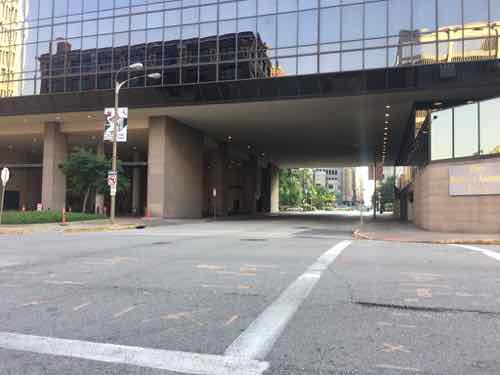
The next block North of Delmar is MLK Dr
St. Louis loves to give away public property, is MLK between 10th-11th is a narrow private service drive. MLK was also vacated West of 11th
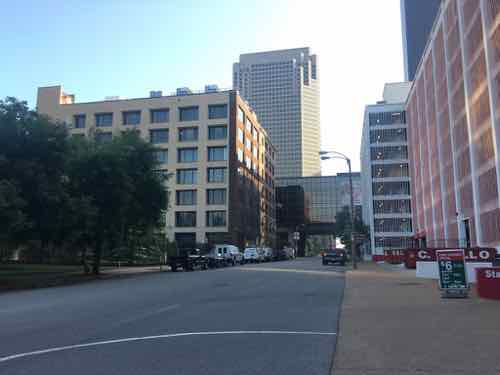
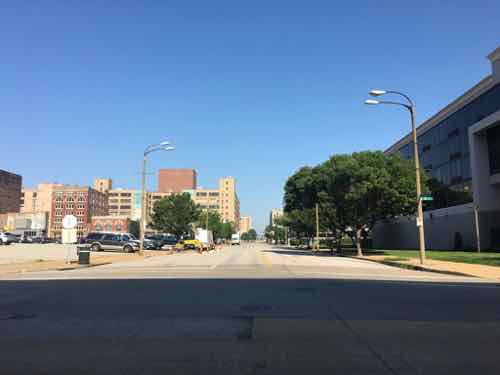
Cole is a nice wide option, but West of Tucker you can see it narrows considerably.

With MLK & Cole ruled out that leaves only one other option: Cass Ave. I’ve written before about 9th & 10th through the Columbus Square neighborhood being excessively wide one-way streets — from when they served as long on/off streets for I-70. Since the bridge construction changed traffic patterns, 9th/10th are way too wide and little used. Running the rail lines on 9th/10th through the center of this neighborhood would help connect it to downtown, partially making up for the convention center (1977) and dome (1993) closing access via 6th/7th/8th.

Looking South at 9th from Cass
Commercial storefront building might become viable if served by rail transit rather than infrequent bus service.
Looking West on Cass from 9th
Looking North from Cass & Tucker. It would be nice if people driving intro St. Louis from this point saw rail transit on Cass
Lots of vacant land at this important intersection, development could be served by rail transit,,
Looking West on Cass from Tucker,
The long-vacant Cass Bank at 13h & Cass might get developed if rail t=ran down Cass
14th Street sidewalks near Cass are horrible, booked in many places or too natrrow due to encroachments like this.

I think more north city residents would be served by extending the line on 9th/19th to Cass. It could continue on Cass to Jefferson or use 13th or 14th to connect to North Florissant ,Connecting the development node at Cass & Tucker to downtown and to NGA West is important.

In the interest of full disclosure, by the end of this year my husband and I will very likely be new residents of the Columbus Square neighborhood, moving from our loft in Downtown West to a smaller place.More on that later. Still, I’ve been photographing & writing about the area for years.

It’s probably too late to consider 9th.10th to Cass, but I had to share it.

— Steve Patterson
 

Advertisement


[custom-facebook-feed]

Archives

Categories

Advertisement


Subscribe