Decade Since The Failed 14th Street Pedestrian Mall Was Reopened in Old North St. Louis
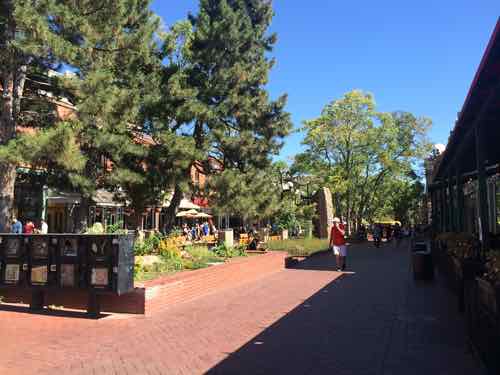
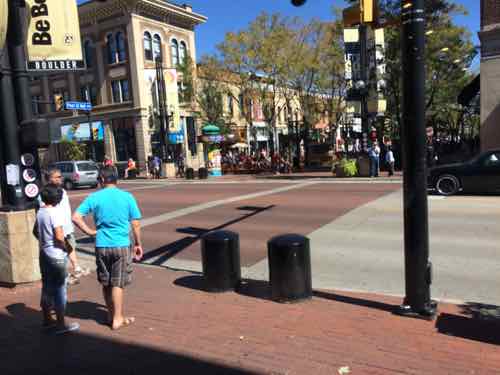
It has now been a decade since a 33-year mistake was corrected. During the 1960s & 1970s removing a street to create a “pedestrian mall” was a magic bullet tried by cities coast to coast. Almost fall failed.
In the early 1970s North 14th Street merchants began looking for solutions to a decline in sales as residents of the surrounding near north neighborhood left for better housing elsewhere.
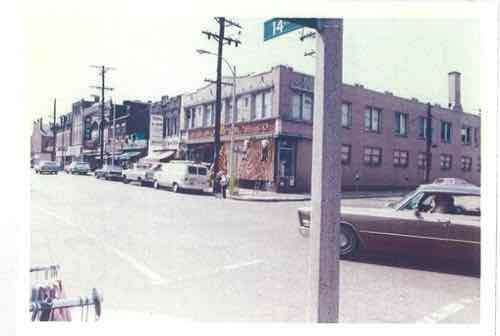
The solution, they thought, was to mall 14th Street. Some buildings behind the street were razed to create large surface parking lots, so former residents could drive back to their old neighborhood to shop at chains like JC Penny & Woolworth’s and local businesses like Sobel’s Furniture.
Open air and enclosed malls were attracting more and more customers so remaking a decades-old neighborhood shopping district to emulate suburban malls would attract customers. Well, that was the theory that led to hundreds of streets nationwide being malled.
More like mauled.
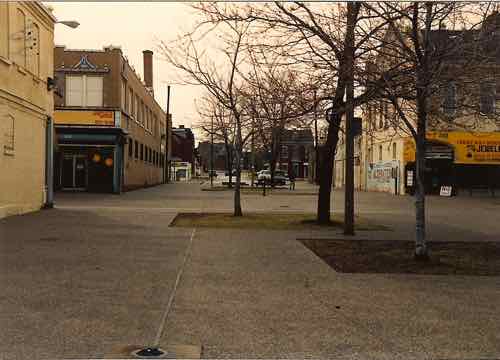
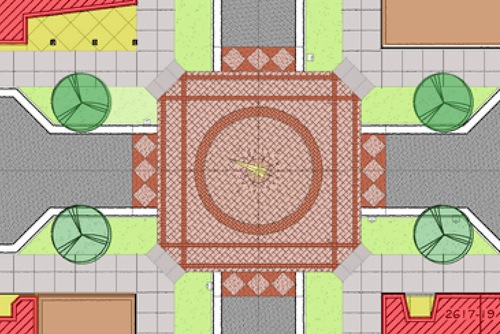
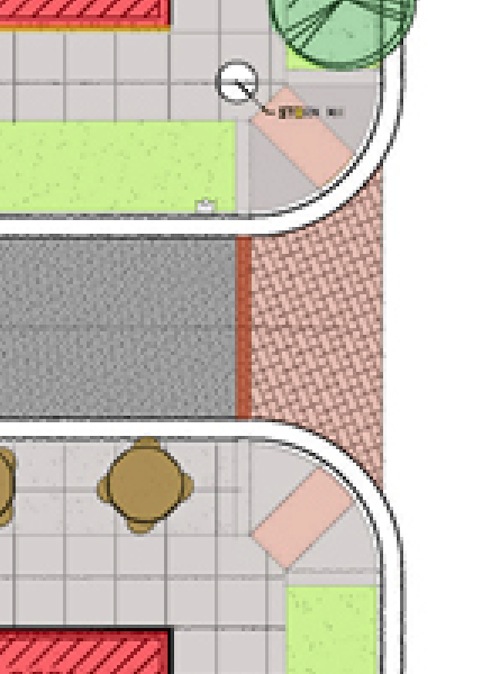
The new 2-block long mall opened on March 2, 1977. Two blocks of North 14th Street were closed to vehicles, from Warren Street on the south to St. Louis Ave on the north. The one cross street, Montgomery Street, was also closed. See current map.
By the time I first saw it in the Fall of 1990 very few businesses remained.
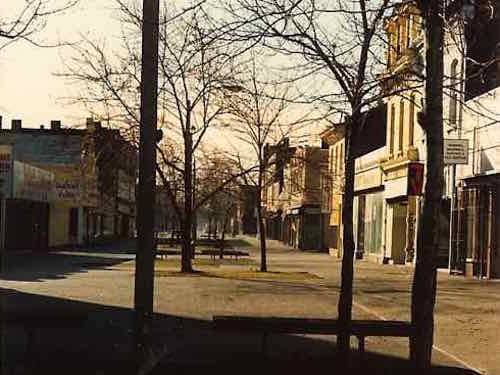
By the Spring of 1991 I was living in the Murphy-Blair neighborhood, the local group was working to rename it Old North St. Louis. The neighborhood located just north of downtown St. Louis was a separate village 1816-1841, when it was annexed by a growing St. Louis.
Two business that were were just beyond the mall were Marx Hardware (Est 1875) and Crown Candy Kitchen (Est 1913), both are still in business.
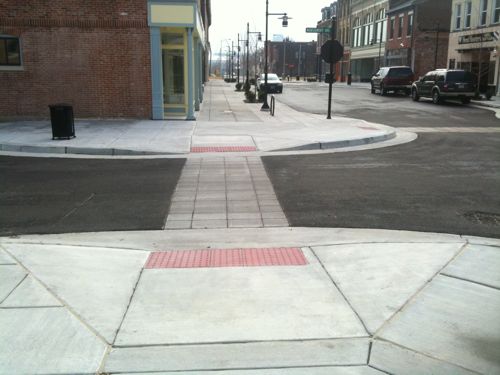
I left the neighborhood in August 1994, but others finally figured out how to put together a project to both renovate the buildings that remained and put back the street. I applaud all involved for their perseverance.
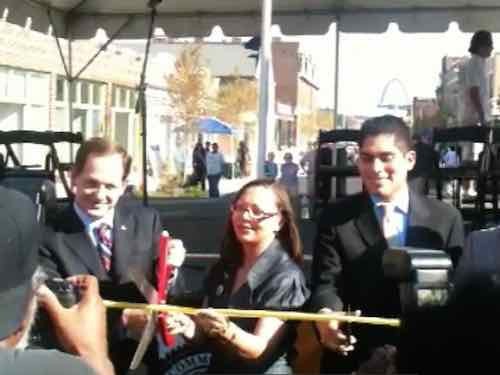
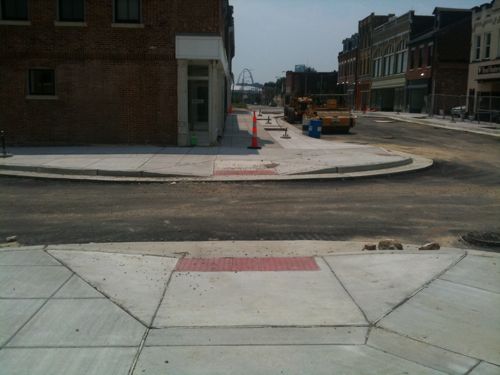
After the ribbon cutting & celebration traffic didn’t immediately begin driving up & down 14th Street. The new streetlights were delayed, so the city’s Streets Dept wouldn’t let cars use the new street. Within a few months the lights and a few other punch list items were completed.
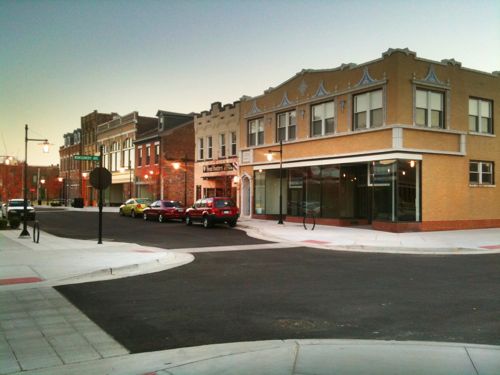
In the decade since the reopening new occupants of the storefronts have changed, retail is a struggle everywhere. The spaces aren’t empty, which is important. The street trees have matured nicely.
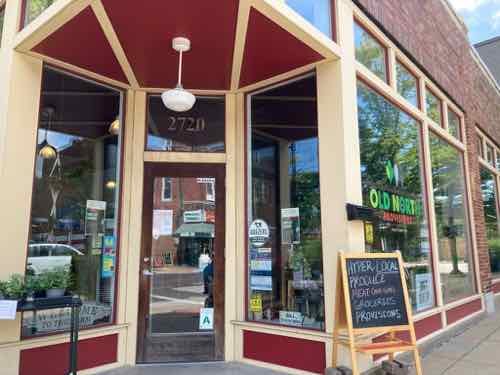
Some say the mall helped keep these buildings from being destroyed, but I think had the mall not been built the street might have been slowly brought back one business at a time, like others in St. Louis.
— Steve Patterson